US Imposes Unified 15% Tariff After Supreme Court Ruling, Reshaping Trade Dynamics with China and Europe
US sets 15% global tariff after Supreme Court limits IEEPA, impacting China, EU, and raising trade tensions; exemptions and legal battles persist.

Washington | EcoPulse24
The United States has entered a more complex phase of trade policy following a Supreme Court ruling that invalidated the wide-ranging tariffs previously imposed under the International Emergency Economic Powers Act (IEEPA). In response, the US administration swiftly enacted a new legal framework, imposing a unified 15% global tariff on imports effective from 12:01 AM, Tuesday, February 24. This shift moves the confrontation from the judiciary to legislative tools, amid ongoing domestic political disputes and heightened international anticipation.
The new tariff rate was set at 15%, up from an initially announced 10%, reaching the legal maximum allowed under Section 122 of the 1974 Trade Act. This provision permits temporary tariffs for 150 days, expiring July 24, 2026, unless extended by Congress. The measure applies to imports valued at about $1.2 trillion annually, with exemptions for metals, energy, select agricultural products, pharmaceuticals, electronics, aircraft parts, and books.
Politically, the move coincided with a direct attack by President Trump on the Supreme Court after a 6-3 majority found that the IEEPA did not authorize tariffs as previously applied. Trump criticized the decision, expressing disappointment with the justices he appointed, and indicated plans to use additional tools such as licensing systems and other trade authorities, raising the likelihood of continued institutional tension between the executive and judiciary.
Trump further suggested leveraging a licensing system as a pressure tool on trading partners, questioning the court's decision and hinting that his administration is exploring further legal avenues.
Independent estimates suggest the new tariffs could generate around $515 billion in revenue over ten years, while the fate of approximately $175 billion previously collected under IEEPA remains unresolved.
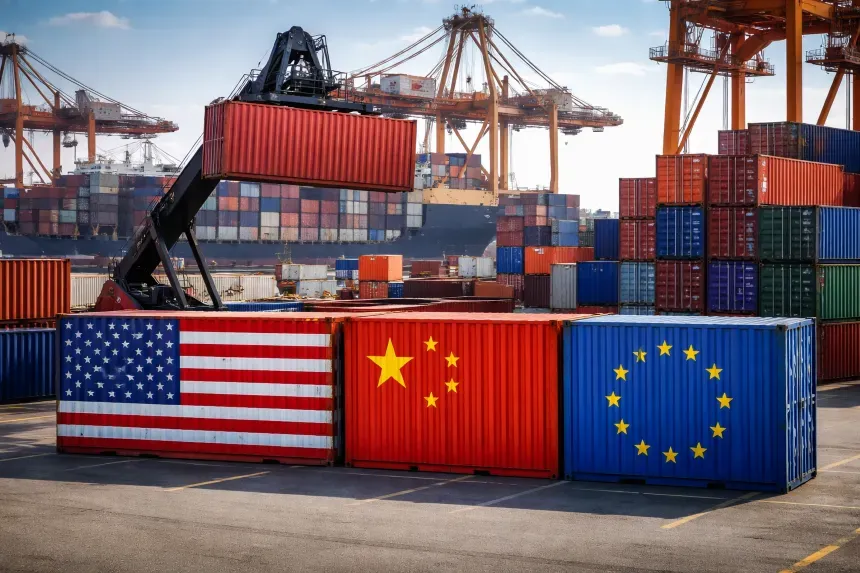
International trade relations have been directly affected. For China, the total tariff burden now reaches 35% when combining the new 15% rate with existing 25% tariffs under separate legal provisions. For the European Union, which had a 15% tariff agreement under IEEPA before the court's ruling, the new measure raises legal questions and has prompted the European Parliament to delay ratification, seeking clarification and warning of possible countermeasures.
The US business environment has shifted from initial relief after the court ruling to new uncertainty as alternative legal tools are deployed. The intersection of legal and commercial paths presents multiple scenarios, including Congress's role in any extension and the use of other trade laws such as Sections 232 and 301.
EcoPulse24 Analysis:
The US move reflects a strategy to reuse legislative tools to maintain a protectionist approach despite judicial constraints. The unified tariff reshapes trade relations and places major partners in a new negotiating landscape. The outlook suggests not a de-escalation, but a period of testing US institutional strength and the global economy's ability to absorb another round of organized trade pressure.
Explore Related Coverage
Sources & References
Editorial Note
Disclaimer
© 2025 EcoPulse24. All rights reserved.