IMF warns of global downturn risk as Iran war triggers oil shock and derails growth outlook
IMF cuts global growth outlook due to Iran war and oil shock, warns of recession risk if disruptions persist; inflation set to rise.

Washington | EcoPulse24
Global growth outlook darkens as energy shock reshapes economic trajectory
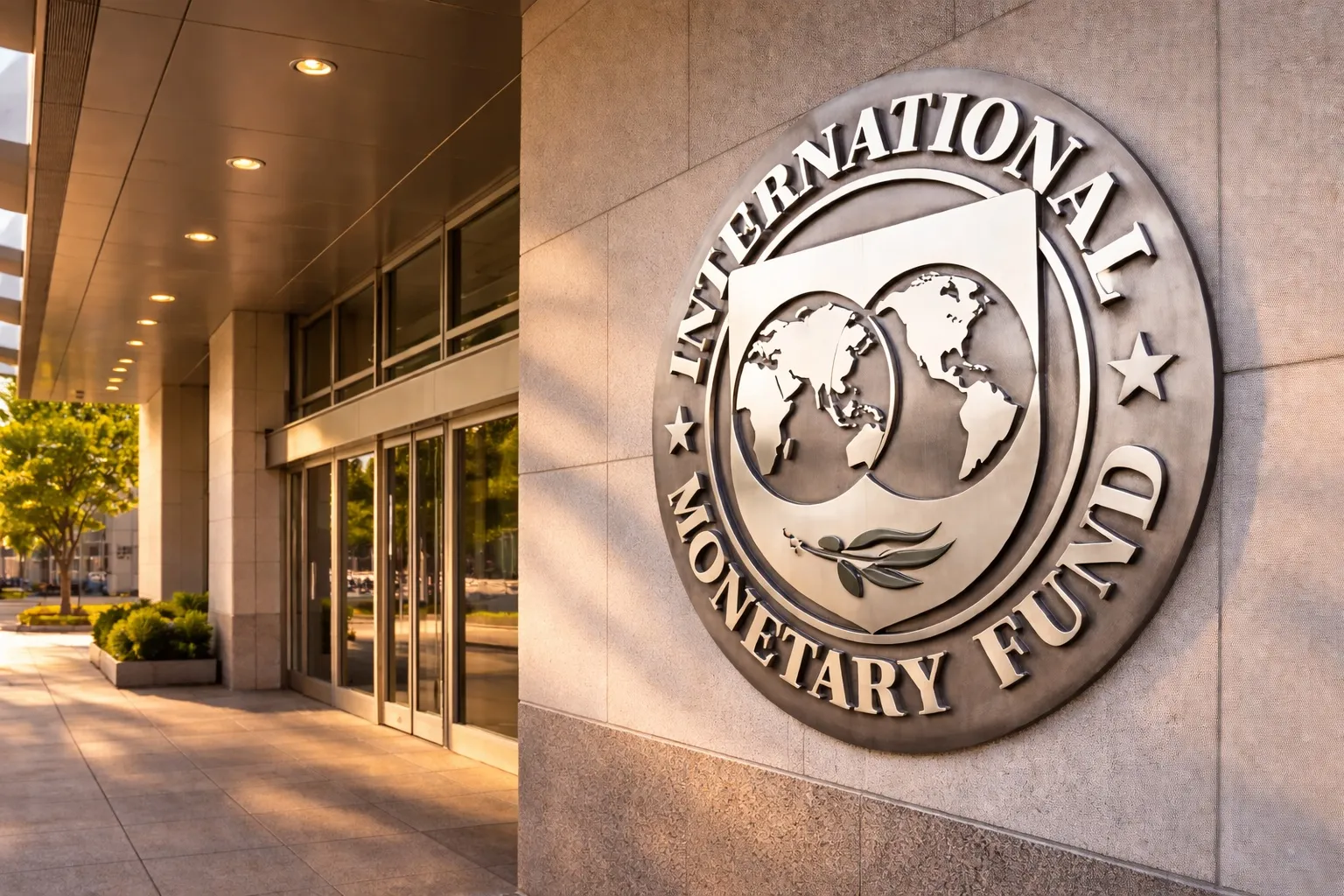
The International Monetary Fund has downgraded its global growth outlook, warning that the war in Iran and the resulting energy shock could push the world economy toward a downturn if disruptions persist, marking a sharp reversal from earlier expectations of stronger expansion.
Global gross domestic product is now projected to grow 3.1% in 2026, down from 3.3% forecast in January, assuming the conflict remains relatively contained and energy prices rise moderately. However, the IMF outlined multiple downside scenarios, including a severe case where global growth could fall below 2% - a threshold the institution associates with a near-global recession.
The downgrade reflects the abrupt shift in macro conditions following the escalation in the Middle East, particularly the disruption of energy flows through the Strait of Hormuz. The conflict has introduced a supply-side shock that is feeding directly into inflation, trade flows, and financial conditions, altering the trajectory of the global economy.
Emerging markets are expected to bear the brunt of the slowdown, with growth projections cut to 3.9% from 4.2%, reflecting their higher sensitivity to energy costs and external financing conditions. Developed economies are relatively more insulated, though still affected, with the United States expected to grow 2.3%, slightly below previous estimates, supported by its position as a net energy exporter.
Europe stands out as one of the most exposed regions, with both Germany and the United Kingdom projected to expand by just 0.8%, reflecting a combination of energy dependency and weaker industrial momentum. China’s growth outlook was also trimmed to 4.4%, with stimulus measures partially offsetting the negative effects of the shock.
In the Middle East and Central Asia, growth is expected to slow sharply to 1.9%, down from 3.6% in 2025, with several economies - including Bahrain, Iraq, Kuwait, and Qatar - facing contractions. Iran’s economy is projected to shrink by 6.1%, highlighting the direct economic toll of the conflict.
Inflation dynamics are also shifting. The IMF now expects global inflation to rise to 4.4% in 2026, up from 4.1% in 2025, reversing the disinflation trend observed in recent years. In a more adverse scenario, inflation could reach 5.4%, while in the most severe case - where oil prices average $110 per barrel - global inflation may climb to 5.8% in 2026 and exceed 6% in the following year.
Global outlook scenarios – IMF projections
| Scenario | Global Growth | Inflation (2026) | Key Assumption |
|---|---|---|---|
| Baseline | 3.1% | 4.4% | Contained conflict, moderate oil rise |
| Adverse | 2.5% | 5.4% | Prolonged disruption, higher energy cost |
| Severe | <2.0% | 5.8%+ | Oil ~$110, major supply shock |
Regional growth outlook – key economies
| Region / Economy | Growth 2026 | Revision Trend |
|---|---|---|
| United States | 2.3% | Slight downgrade |
| Eurozone (Germany) | 0.8% | Downgraded |
| United Kingdom | 0.8% | Downgraded |
| China | 4.4% | Slight downgrade |
| Emerging Markets | 3.9% | Downgraded |
| Middle East & C. Asia | 1.9% | Sharp slowdown |
These projections underscore the growing influence of energy markets on global economic stability, as supply disruptions increasingly shape macro outcomes.
EcoPulse24 Analysis
The IMF’s revised outlook confirms that the global economy has entered a supply-shock phase, where energy disruptions - not demand weakness - are the primary driver of macro risk. This distinction is critical because supply-driven shocks tend to be more persistent and more difficult for policymakers to counter.
The closure of the Strait of Hormuz has transformed a regional conflict into a global economic event. By constraining one of the most important energy transit routes, the war has introduced systemic friction into oil and gas flows, which directly feeds into inflation, production costs, and trade imbalances.
The most important shift is the transition from a disinflationary environment to a re-acceleration of inflation. Energy prices act as a transmission mechanism, spreading cost pressures across sectors, from transportation to manufacturing to food. This dynamic limits the ability of central banks to ease monetary policy, even as growth slows - a classic stagflationary setup.
Emerging markets are particularly vulnerable in this environment. Their dependence on imported energy and external financing exposes them to both higher costs and tighter financial conditions. This dual pressure explains the sharper downgrade in their growth outlook compared to advanced economies.
The IMF’s scenario framework highlights a key risk asymmetry. While the baseline assumes containment, the downside scenarios escalate quickly in severity. A move from 3.1% to below 2% growth represents not just a slowdown, but a structural break in the global cycle, historically associated with crises such as the global financial crisis and the pandemic.
Another critical dimension is the erosion of economic buffers. Fiscal space is more limited than in previous cycles, and central banks are constrained by inflation. This reduces the effectiveness of traditional policy responses, increasing the likelihood that shocks translate more directly into economic contraction.
At a structural level, the crisis reinforces the shift toward an energy-driven macro regime. Growth, inflation, and financial stability are becoming increasingly dependent on the reliability of energy supply chains. This redefines the hierarchy of risks in the global economy, placing geopolitical control over energy routes at the center of macro analysis.
Ultimately, the IMF’s warning is not just about a potential slowdown - it is about a reconfiguration of the global economic system. If the conflict persists, markets will need to adapt to a world where supply constraints, geopolitical fragmentation, and energy security define the economic cycle more than traditional demand dynamics.
Sources & References
Editorial Note
Disclaimer
© 2025 EcoPulse24. All rights reserved.