KOSPI Climbs 2% to 5,680 as Easing Oil Prices Lift Asian Equities
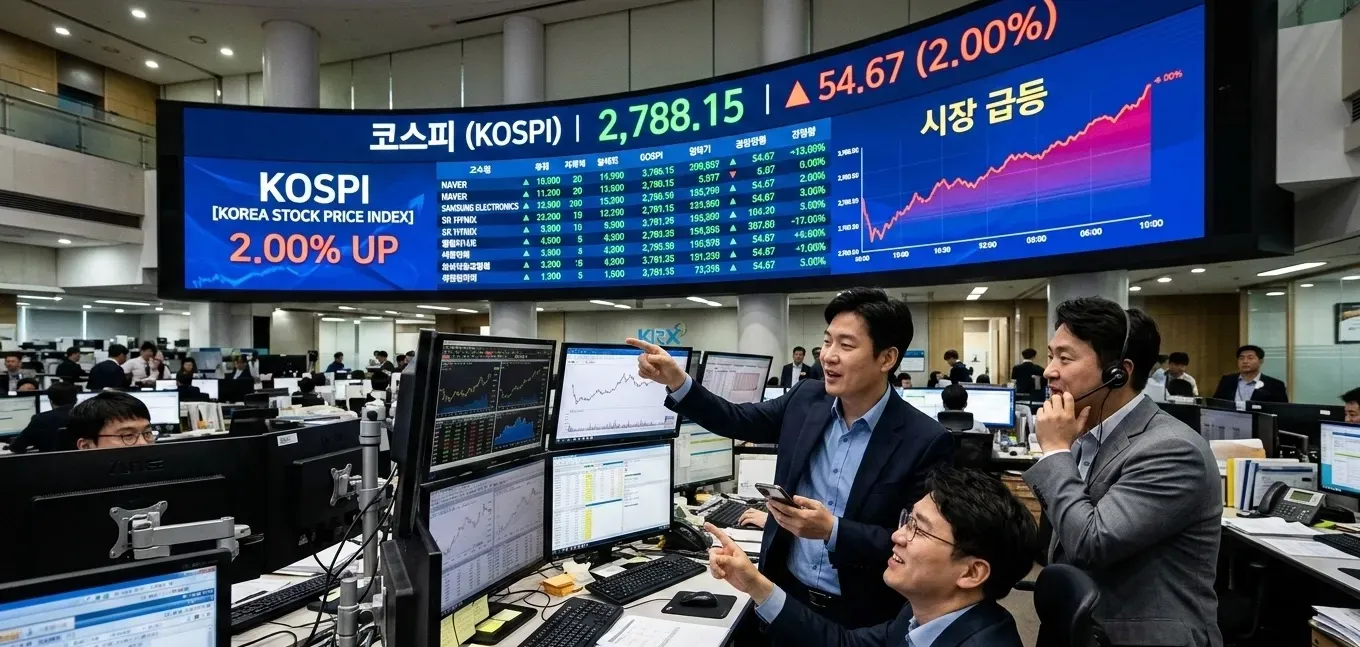
South Korea KOSPI climbs 2% to 5,680 as oil prices ease on Strait of Hormuz shipping relief, led by Samsung +3.9% and Hyundai Motor +5.5%.

EcoPulse24 | Seoul
South Korea's benchmark KOSPI index climbed more than 2% to approximately 5,680 on Tuesday, extending gains for a second consecutive session as easing crude oil prices lifted global risk appetite and supported energy - sensitive markets. The rally tracked strong overnight gains on Wall Street, where major indexes advanced on cooling energy prices and improving sentiment around the Middle East conflict.
Market Performance and Key Movers
Gains on the KOSPI were broad - based, led by heavyweight technology shares. Samsung Electronics advanced 3.9% and SK Hynix rose 2.3%, both riding continued optimism around artificial intelligence demand that has provided a persistent tailwind for chip makers globally. Beyond tech, Hyundai Motor surged 5.5%, LG Energy Solution added 1.6%, SK Square jumped 6.1%, and Kia Corporation climbed 3.8%.
The gains tracked the mood on Wall Street, where the Dow Jones Industrial Average gained 0.83%, the S&P 500 advanced 1.01%, and the Nasdaq Composite jumped 1.22% on Monday. All 11 S&P sectors finished higher in the previous session, led by technology, consumer discretionary, and communication services. Nvidia added 1.7% after CEO Jensen Huang said at the company's annual GTC conference that he expects $1 trillion in orders for Nvidia's Blackwell and Vera Rubin systems through 2027.
Oil Price Relief Drives Risk - On Mood
The primary catalyst for Tuesday's KOSPI rally was a sharp pullback in crude oil prices from recent highs. WTI crude dropped more than 5% on Monday after several tankers successfully navigated the Strait of Hormuz over the weekend, easing fears of a prolonged closure of the vital waterway. The strait handles roughly 20% of global oil trade, and the conflict - related disruptions had pushed crude prices sharply higher over the preceding two weeks.
For South Korea, which imports nearly all of its crude oil requirements, lower energy prices offer meaningful relief for corporate margins and consumer spending power. The country's export competitiveness is also closely tied to energy cost dynamics, particularly for automobile and semiconductor manufacturers that rely on energy - intensive production processes.
South Korea Export Prices Signal Momentum
The market rally comes alongside data showing South Korea's export prices rose 10.7% year - on - year in February 2026, the sharpest increase since June 2024. The increase was largely driven by manufactured goods prices climbing 10.7%, with agricultural, forestry, and marine products up 11.9%. Exports to the US continued to be affected by a 15% tariff, though overall export volumes still increased 16.6% year - on - year. The import price index also rebounded, rising 1.2% year - on - year in February, reversing a 0.9% decline in January.
Fed Decision in Focus
Investors are now turning their attention to the US Federal Reserve's policy meeting scheduled for Wednesday, where the central bank is widely expected to keep interest rates unchanged as policymakers weigh the complex interplay between elevated energy prices, broader inflationary pressures, and the economic uncertainty generated by the Iran conflict. Fed Chair Jerome Powell's comments on the Middle East situation and its implications for the US inflation outlook will be closely scrutinized by market participants globally.
EcoPulse24 Analysis
EcoPulse24 Analysis: The KOSPI's 2% rally on Hormuz relief is a clean illustration of how closely Asian equity markets are tethered to Middle East energy dynamics - a connection that should command the attention of GCC investors watching global capital flows. When oil prices ease, energy - importing Asian markets like South Korea, Japan, and India tend to outperform, creating a rotation of capital away from commodity - heavy GCC markets toward tech - heavy Asian benchmarks. The strong performance of Samsung, SK Hynix, and the AI chip ecosystem also signals that structural demand for semiconductors remains robust despite geopolitical headwinds. For Gulf sovereign wealth funds and institutional investors with significant Asian equity exposure, Tuesday's session offers a reminder that the AI investment cycle has not been derailed, even as traditional energy markets remain in flux.
Sources & References
Editorial Note
Disclaimer
© 2025 EcoPulse24. All rights reserved.