*New York, November 21, 2025*
The semiconductor titan, long anointed as the undisputed king of AI hardware, unveiled fiscal results on Wednesday that shattered Wall Street's already lofty expectations. Revenue rocketed 94% year-over-year to $35.1 billion, fueled by insatiable demand for its graphics processing units (GPUs) that power everything from ChatGPT queries to autonomous vehicle training. Net income more than tripled to $16.6 billion, with the data center segment – Nvidia's AI cash cow – surging 112% to $30.8 billion. Chief Executive Jensen Huang, ever the showman, hailed the quarter as a "testament to the transformative power of accelerated computing," projecting even more explosive growth in the coming year.
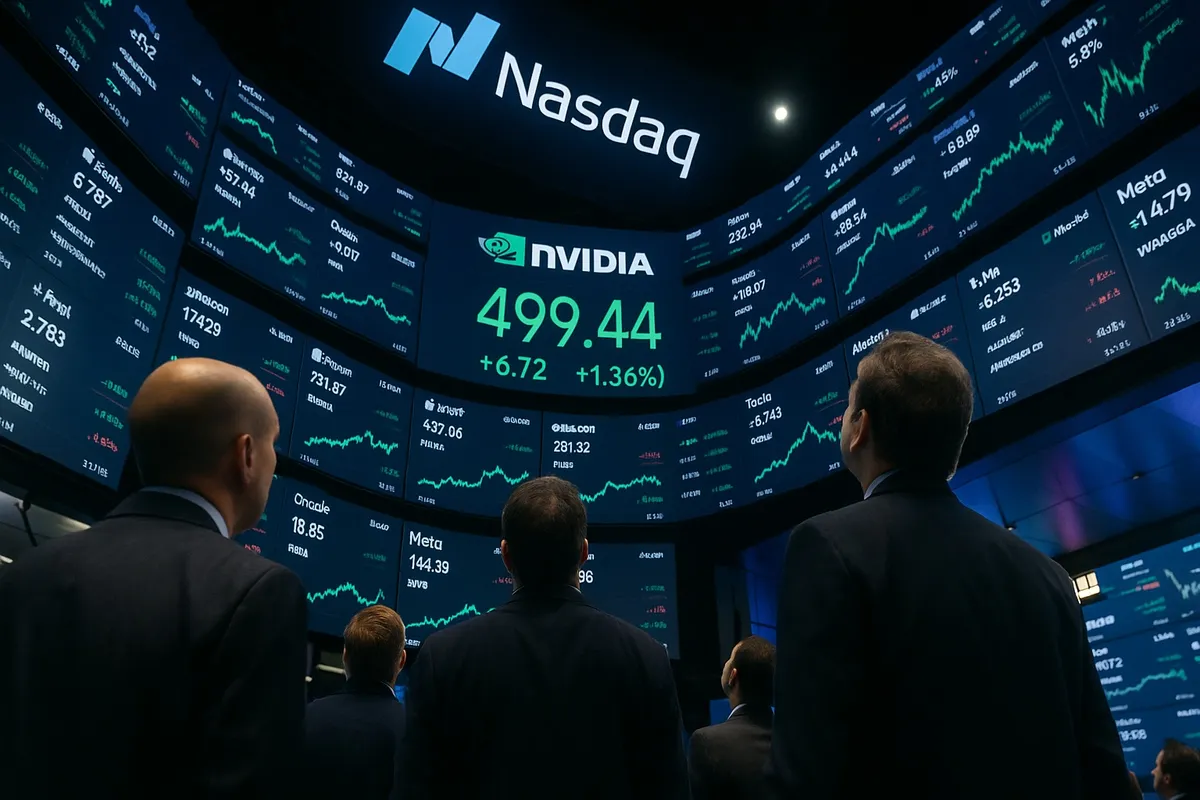
On paper, it's a dream scenario for investors. Nvidia's stock, which has ballooned over 2,000% in the past five years, climbed another 6% in after-hours trading, extending its market capitalization to a staggering $3.2 trillion – comfortably ahead of Apple Inc. as the world's most valuable company. The rally rippled through the sector, lifting peers like Advanced Micro Devices Inc. and Broadcom Inc., while the Nasdaq Composite futures edged higher in sympathy.
Yet, beneath the euphoria, a gnawing unease persists. For all its dominance, Nvidia's triumph isn't dispelling the specter of an AI investment bubble – it's arguably inflating it further. Critics, from hedge fund managers to Silicon Valley skeptics, point to a familiar playbook: explosive growth predicated on hype, with scant evidence of near-term profitability for the end-users gobbling up those chips.
Consider the math. While Nvidia's gross margins held steady at a enviable 75%, the broader AI ecosystem remains a black hole of capital expenditure. Hyperscalers like Microsoft Corp., Amazon.com Inc., and Alphabet Inc. are projected to pour north of $200 billion into data centers this year alone, much of it funneled straight to Nvidia's coffers. But where's the return? Enterprise adoption of generative AI tools lags, with McKinsey & Co. estimating that only 5% of companies have scaled beyond pilot programs. Revenue from AI applications? A trickle, at best – Salesforce Inc. recently admitted its Einstein AI suite is contributing a mere fraction to its bottom line.
This asymmetry has echoes of the dot-com era, when fiber-optic dreamers built capacity for a digital utopia that arrived a decade late. "Nvidia is the Cisco of this cycle," quipped David Rosenberg, chief economist at Rosenberg Research. "They're selling the picks and shovels, but the gold rush could fizzle if the miners don't strike paydirt." Rosenberg's firm has been bearish on Big Tech, warning that AI's productivity miracle – touted by optimists as a multi-trillion-dollar boon – may take years to materialize, if it does at all.
The bubble barometer is flashing red on other fronts. Venture capital inflows into AI startups hit $50 billion in the third quarter, per PitchBook data, rivaling the frothiest days of 2021. Valuations are nosebleed: OpenAI's rumored $150 billion tag implies a price-to-sales multiple of 50x, while Anthropic Inc. commands premiums that make even Nvidia look like a value play. And then there's the energy conundrum – AI's voracious appetite for electricity could strain grids and spike costs, with the International Energy Agency forecasting data centers will consume as much power as Japan by 2026.
Regulators aren't asleep at the wheel. The U.S. Federal Trade Commission, under Lina Khan's antitrust gaze, is probing Nvidia's market share in AI chips, which exceeds 80%. Antitrust suits could crimp pricing power, while export curbs to China – already biting into sales – underscore geopolitical risks. Overseas, the European Union's AI Act, effective next year, promises to layer on compliance burdens that could slow the stampede.
To be sure, not everyone sees doom. Bullish analysts at Goldman Sachs reiterated their conviction buy on Nvidia, forecasting sustained 50%+ annual growth through 2027 as AI permeates industries from drug discovery to climate modeling. "The secular tailwinds are real," said a Goldman strategist, noting that sovereign wealth funds and pension giants are doubling down on AI infrastructure bets.
But in the zero-sum game of markets, today's hero can become tomorrow's cautionary tale. Nvidia's ascent has masked fractures in the Magnificent Seven – Tesla Inc.'s stumbles, Meta Platforms Inc.'s metaverse misfires – yet the index's 30% YTD gain is overwhelmingly Nvidia-driven. A stumble here could cascade, pulling the entire AI narrative into question.
As investors chase the next leg up, the question lingers: Is this a genuine inflection point in human ingenuity, or just the latest chapter in mankind's love affair with speculative excess? History suggests caution. After all, even the mightiest moats can crack under the weight of their own ambition. For now, Nvidia isn't just enough – it's everything. But bubbles, by definition, have a way of reminding us that more isn't always better.