Brent Crude Retreats 13.1% in 21 Days as Markets Reprice Middle East Risk Premiums
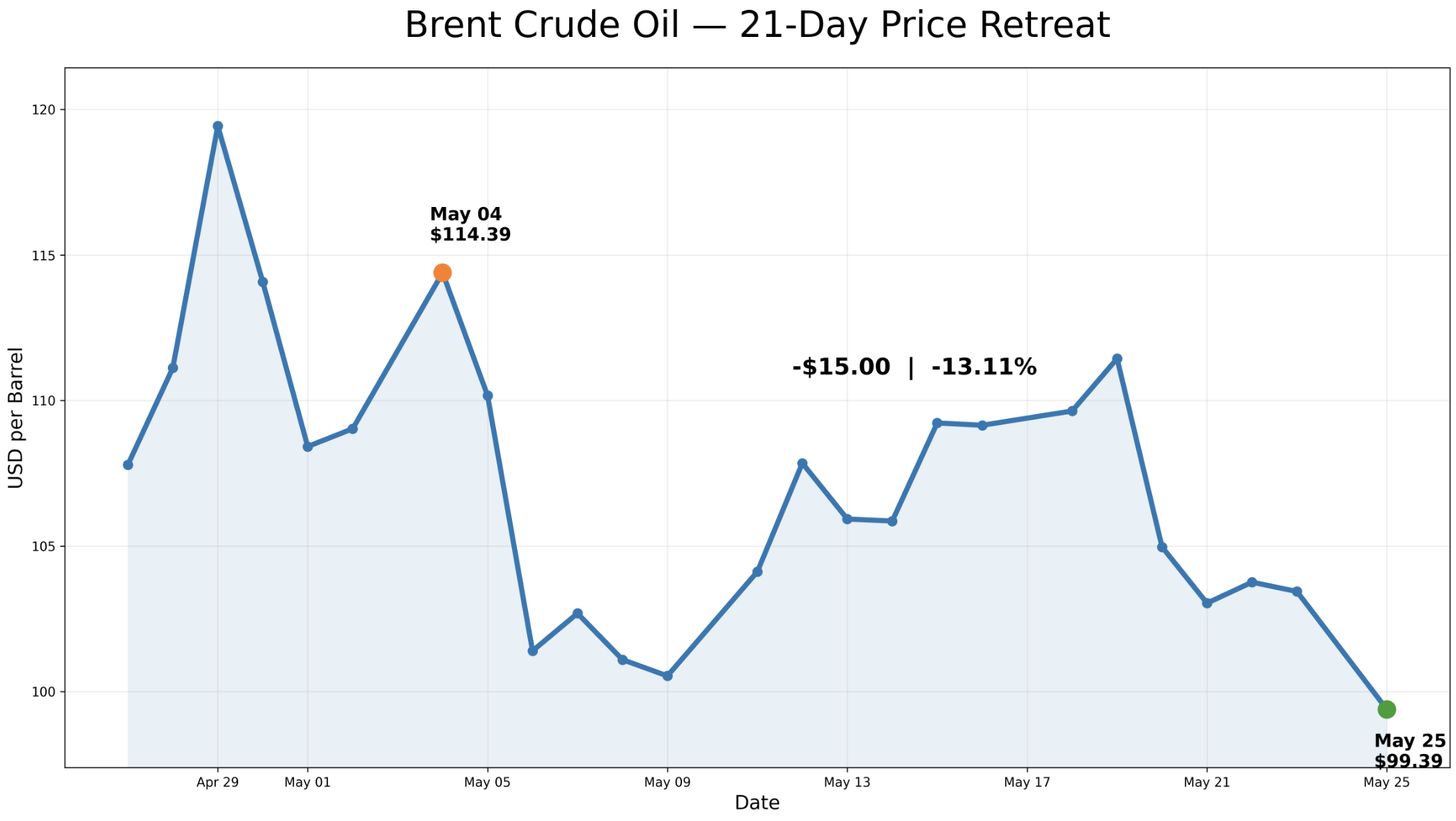
Data tracked by Masadir Economics showed Brent crude falling 13.1% over the last 21 days, representing a decline of roughly $15 per barrel


Dubai | EcoPulse24
Brent crude oil prices have retreated sharply over the past three weeks as energy markets reassessed geopolitical risk premiums linked to the Middle East conflict and the Strait of Hormuz.
Data tracked by Masadir Economics showed Brent crude falling 13.1% over the last 21 days, representing a decline of roughly $15 per barrel from recent highs.
The latest reading showed Brent trading near $99.39 per barrel on May 25, compared with approximately $114.39 on May 4, according to the chart data.
The move marks one of the largest short-term reversals since the recent energy shock began reshaping global inflation and commodity expectations earlier this year.
The decline comes as markets increasingly price in the possibility of reduced escalation risks following signs of diplomatic progress tied to US-Iran negotiations and partial stabilization in regional energy flows.
Geopolitical Premiums Begin Normalizing
Oil markets had previously surged after disruptions linked to the Strait of Hormuz triggered fears over global supply shortages and broader energy-security risks.
At the peak of the recent rally, Brent briefly approached the mid-$110 range as traders priced in:
-
shipping disruptions,
-
tighter inventories,
-
elevated insurance costs,
-
and risks to Gulf export infrastructure.
However, sentiment has shifted in recent sessions as some LNG and oil cargoes resumed movement through Hormuz while investors reassessed worst-case supply disruption scenarios.
The repricing also coincided with broader easing across inflation-sensitive assets and growing expectations that energy markets may avoid a prolonged full-scale supply shock.
Volatility Remains Elevated
Despite the pullback, analysts continue monitoring the region closely as oil markets remain highly sensitive to:
-
shipping conditions,
-
geopolitical developments,
-
insurance availability,
-
and military escalation risks across the Gulf.
Brent prices nevertheless remain elevated relative to pre-conflict levels, underscoring that a significant geopolitical premium is still embedded into global energy markets.
The latest decline also reflects how quickly oil markets can reverse once traders begin unwinding defensive positioning tied to geopolitical uncertainty.
EcoPulse24 Analysis
The 13.1% retreat in Brent over just 21 days illustrates that the recent oil spike was driven as much by geopolitical pricing psychology as by physical supply destruction.
Markets initially priced a severe disruption scenario tied to Hormuz and Gulf energy infrastructure.
Now, traders appear to be recalibrating toward a more moderate risk outlook as partial cargo flows continue and diplomatic channels remain active.
That does not mean the geopolitical risk has disappeared.
Instead, the market is transitioning from:
“panic pricing”
toward:
“managed disruption pricing.”
This distinction matters globally because oil prices continue feeding directly into:
-
inflation expectations,
-
shipping costs,
-
aviation,
-
food supply chains,
-
and central-bank policy assumptions.
For Gulf economies, lower oil prices may ease inflation pressures globally, but sustained volatility continues reinforcing the strategic importance of:
-
export-route diversification,
-
energy infrastructure resilience,
-
and secure maritime logistics across the region.
Sources & References
Editorial Note
Disclaimer
© 2025 EcoPulse24. All rights reserved.