Dubai’s Luxury Real Estate Momentum Continues as Developers Bet on Strong Global Demand Through 2026
Dubai's luxury real estate market stays strong, driven by global demand, with developers optimistic through 2026 despite geopolitical risks.

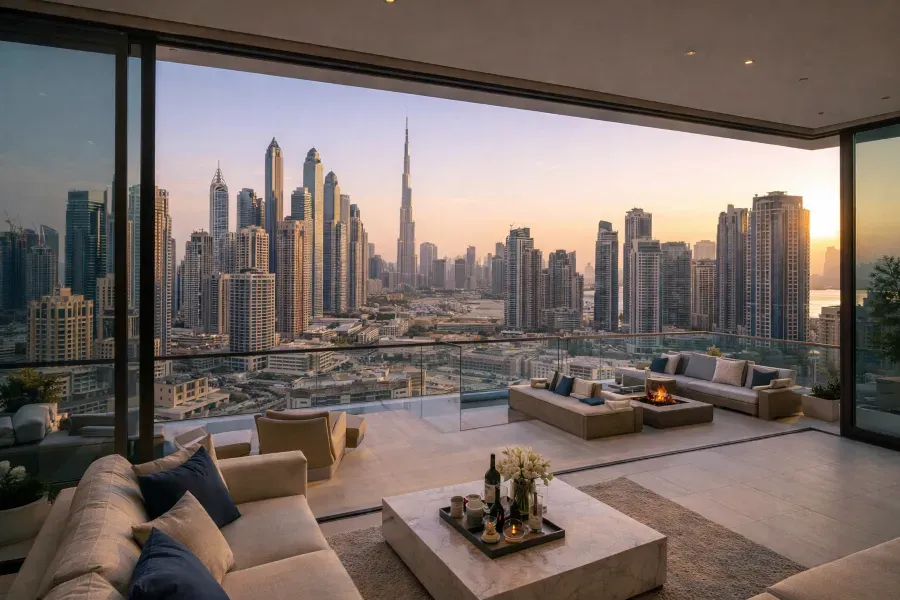
Dubai | EcoPulse24
Dubai’s luxury real estate market continues to see high levels of demand, primarily driven by ongoing inflows from wealthy international buyers. Developers are betting that this momentum will extend through 2026, even as geopolitical risks rise and some analysts warn of a possible slowdown following several years of price surges.
Shahab Lutfi, Chairman of H&H Development, said demand for ultra-luxury properties in Dubai has shown no signs of easing, with prices continuing to rise compared to previous years. Concerns about a slowdown, raised two years ago, have not materialized as foreign investors remain keen on high-value residential units.
This week, H&H launched presales for branded luxury residences in its 5.5 billion dirham mixed-use project, Jano Dubai, located in the heart of Dubai International Financial Centre. The project reflects developers’ focus on high-end products targeted at a select group of international buyers.
H&H is banking on continued overseas demand, with projects under development in Dubai exceeding 30 billion dirhams in value. Lutfi noted that the company's average apartment sale price is around $10 million, highlighting the exclusive market segment it serves.
Despite optimism, Lutfi acknowledged that geopolitical risks - especially ongoing Middle East tensions and recent US-Iran escalations - could disrupt the market at any time. However, he pointed out that the market has shown notable resilience, with buyers returning quickly after previous periods of tension, including the recent 12-day conflict between Israel and Iran.
The buyer profile has shifted in recent years: once dominated by Eastern Europeans, demand now mainly comes from the UK, Switzerland, France, and other Western European cities, with some buyers relocating families and businesses to Dubai, not just investing.
This marks a major shift from two decades ago, when Lutfi co-founded H&H with UAE Minister of State for Financial Affairs Mohamed Al Hussaini. At that time, Dubai’s luxury property market was nascent and $10 million-plus deals were rare.
Research data now show that about 500 residential units in Dubai sold for more than $10 million last year - surpassing cities like New York and Hong Kong. There were also around 68 transactions above $25 million, demonstrating the depth of demand in this segment.
Lutfi highlighted that luxury property prices in Dubai remain at least 50% lower than in cities like New York, London, or Hong Kong, while offering superior amenities and branded services. A large share of buyers pay in cash, reducing financial leverage risks.
H&H focuses on three main Dubai areas: DIFC, Jumeirah beachfront, and Emirates Hills. The Jano Dubai project features two towers - one fully sold to Aldar Properties before construction began, and the other including a 150-room hotel and 57 branded luxury residences.
Originally a boutique property management firm, H&H has evolved into a prominent developer in luxury hotels and serviced apartments, partnering with global brands like Aman, Baccarat, Four Seasons, and Rosewood. The company recently signed an agreement to develop Dubai’s first Capella hotel, with 106 rooms.
EcoPulse24 Analysis:
The sustained momentum in Dubai’s luxury real estate sector signals a shift from speculative trading to attracting global wealth seeking stability, lifestyle quality, and long-term returns. Competitive pricing versus global capitals gives Dubai a clear edge, while a cash-heavy buyer base limits sudden contraction risks. Nonetheless, geopolitical factors, interest rates, and capital flows remain critical to the sector’s sustainability through 2026 and beyond. Luxury real estate is now a pillar of Dubai’s investment appeal, but balancing growth and market stability will be essential to avoid sharp correction cycles.
Explore Related Coverage
Sources & References
Editorial Note
Disclaimer
© 2025 EcoPulse24. All rights reserved.