Egypt's Urban Inflation Slows to 11.9% in January, Lowest in 4 Months Despite Food and Housing Pressures
Egypt's urban inflation fell to 11.9% in Jan 2026, lowest in 4 months, but food and housing costs keep pressure on households.

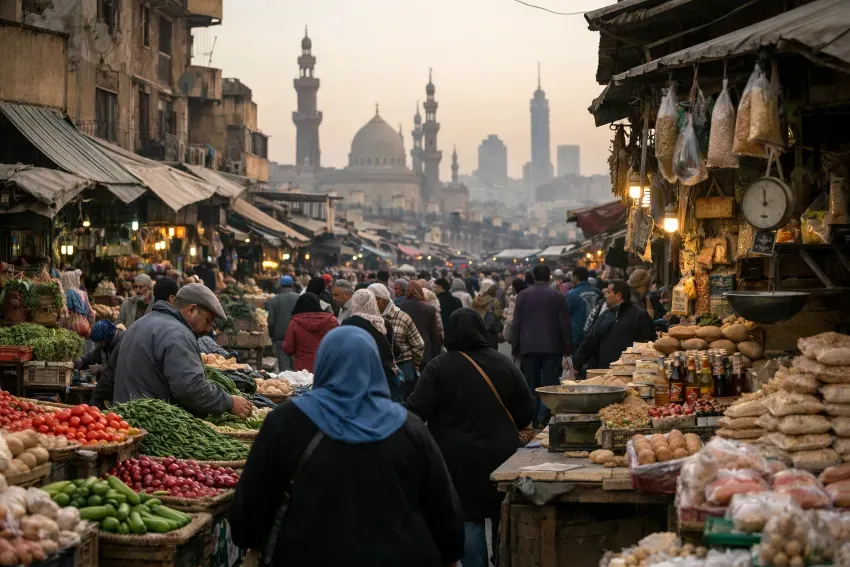
Cairo | EcoPulse24
Egypt's annual urban consumer price inflation slowed markedly in January 2026, reaching 11.9% compared to 12.3% in December - the lowest level since September. This suggests a gradual easing of price pressures that followed fuel price hikes in late 2025.
Despite the decline, the inflation rate slightly exceeded market expectations of 11.7%, signaling ongoing structural inflation, particularly in food and housing, which continue to strain household budgets.
Data showed inflation slowed in key sectors: transport inflation fell to 27.5% from 28.4% in December as the lagged effects of October’s fuel hikes faded. Inflation in restaurants and hotels dropped to 11.9% from 12.8%, miscellaneous goods and services to 10.4% from 11.3%, and furniture and household equipment to 10.8% from 12.6%.
Conversely, telecommunications services prices remained stable at 0.4%, indicating relative sector stability amid recent inflation waves.
However, inflation accelerated in some socially sensitive categories: food and non-alcoholic beverages rose to 1.9% from 1.5%, clothing and footwear to 14.1% from 12.8%, and housing and utilities to 29.8% from 29.2%, driven by sustained rent and housing cost increases.
On a monthly basis, the consumer price index rose by 1.2% in January, up from a modest 0.2% in December, marking the fastest monthly rise in three months and indicating that short-term price pressures persist despite the annual rate’s decline.
EcoPulse24 Analysis
The annual inflation slowdown in January reflects a temporary cooling rather than a decisive turning point in Egypt’s inflation path. The decline is mainly due to the fading impact of past fuel price hikes, not a fundamental improvement in economic supply-demand balance. Meanwhile, the acceleration in monthly inflation and rising food and housing costs show that cost-of-living pressures remain, especially for middle- and lower-income groups.
Economically, this relative slowdown gives the Central Bank of Egypt additional time to monitor developments without immediate monetary tightening but does not yet provide clear signals for an easing cycle, particularly with key inflation components still high. Any future moves in energy prices or the exchange rate could quickly reignite inflationary pressures.
In the coming months, inflation’s trajectory will depend on three main factors: global and local food price stability, rental market trends, and fiscal and monetary policy directions. If major price shocks remain contained, inflation may gradually decline but will likely stay above target levels in the near term.
Explore Related Coverage
Sources & References
Editorial Note
Disclaimer
© 2025 EcoPulse24. All rights reserved.