IEA Launches Historic Oil Reserve Release as Middle East Conflict Disrupts Hormuz, Causing Global Energy Crisis
IEA releases record oil reserves as Middle East war disrupts Hormuz, causing global oil and LNG shortages and extreme market volatility.

Paris | EcoPulse24
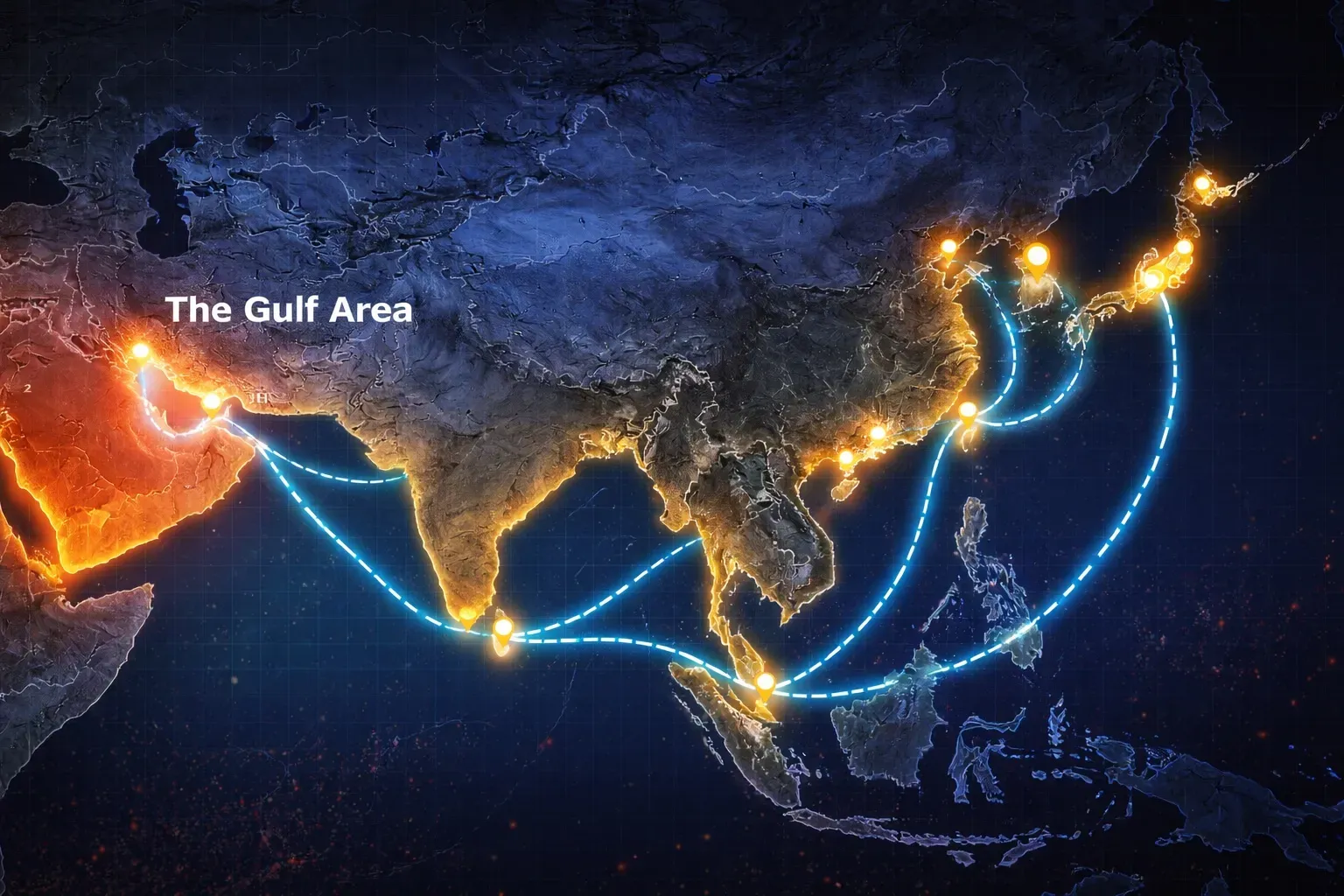
Global energy markets are entering one of the most volatile periods in decades as the war in the Middle East disrupts oil and natural gas flows through the Strait of Hormuz, the narrow maritime corridor that underpins a significant share of the world’s energy trade. The crisis has forced governments to intervene directly in markets, with the International Energy Agency (IEA) coordinating the largest emergency release of strategic oil reserves in its history while global liquefied natural gas (LNG) markets tighten sharply due to supply disruptions from the Gulf.
The developments underscore the extraordinary importance of the Strait of Hormuz to global energy security and highlight the fragility of supply chains that depend on uninterrupted maritime transit through the Gulf.
Historic strategic oil release
In an unprecedented move, the 32 member countries of the International Energy Agency agreed to release more than 400 million barrels of oil from their emergency reserves to stabilize global markets and mitigate the severe supply disruption caused by the conflict.
The decision followed an extraordinary meeting of member governments after oil flows through the Strait of Hormuz collapsed to less than 10% of pre-conflict levels, forcing operators across the region to shut in or curtail substantial volumes of production.
The scale of the coordinated release far exceeds previous IEA emergency interventions. The largest earlier release occurred in 2022 following Russia’s invasion of Ukraine and totaled roughly 120 million barrels across multiple phases. The current commitment of more than 400 million barrels reflects the far greater severity of the supply shock facing global markets today.
According to the IEA, member countries collectively hold more than 1.2 billion barrels of government-controlled emergency reserves, in addition to roughly 600 million barrels of industry stocks held under government obligation. These strategic reserves are designed specifically to protect markets during large-scale disruptions such as wars or geopolitical crises that threaten global energy supply.
Implementation of the emergency plan
The latest update from the IEA confirms that implementation of the reserve release has now begun. Member governments have submitted detailed plans outlining how the emergency stocks will be deployed across regions.
Oil from IEA member countries in Asia-Oceania will begin reaching markets immediately, while supplies from Europe and the Americas are expected to enter global markets starting at the end of March.
IEA Collective Action of 11 March 2026 – Regional Overview
(in million barrels)
| Region | Government Stocks | Industry Stocks | Other | Composition |
|---|---|---|---|---|
| Americas | 172.2 | - | 23.6 | 100% crude |
| Asia-Oceania | 66.8 | 41.8 | - | 60% crude / 40% products |
| Europe | 32.7 | 74.8 | - | 32% crude / 68% products |
| Total | 271.7 | 116.6 | 23.6 | 72% crude / 28% products |
Even at this historic scale, analysts caution that the intervention can only partially offset the supply shock. Global oil demand currently stands near 103 million barrels per day, meaning the total emergency release represents only a few days of global consumption if the disruption continues for an extended period.
The strategic stock release therefore functions primarily as a temporary buffer designed to slow the market impact of supply losses while governments assess the evolving geopolitical situation.
Hormuz: the world’s most critical energy chokepoint
The crisis is centered on the Strait of Hormuz, the narrow maritime passage connecting the Gulf with global shipping routes. The strait is widely regarded as the single most important chokepoint in global energy trade.
In 2025, approximately 20 million barrels per day of crude oil and refined petroleum products transited the strait, representing around 25% of global seaborne oil trade.
With export flows now reduced to less than 10% of their normal levels, producers across the Gulf have been forced to shut in or curtail output due to the limited ability to move crude to international markets.
While some pipeline infrastructure allows partial diversion of exports, most Gulf oil production ultimately depends on maritime transit through the Strait of Hormuz, leaving global markets highly vulnerable to prolonged disruptions in the region.
LNG markets face simultaneous disruption
At the same time that oil markets are struggling with supply constraints, global LNG markets are also experiencing significant disruption due to the conflict’s impact on Gulf exports.
According to the International Energy Agency, around 110 billion cubic meters of liquefied natural gas passed through the Strait of Hormuz in 2025, accounting for nearly one-fifth of global LNG supply.
The conflict has slowed tanker movements through the strait to a trickle, while an attack on facilities at Ras Laffan in Qatar - the largest LNG production complex in the world - forced temporary shutdowns at key export installations.
Because nearly all LNG passing through Hormuz originates from Qatar or the United Arab Emirates, the disruption has immediate consequences for global gas supply chains.
Asian markets most exposed
Asian economies are particularly vulnerable to LNG supply disruptions from the Gulf.
In 2025, almost 90% of LNG exported through the Strait of Hormuz was delivered to Asian buyers, while just over 10% went to Europe.
Major LNG importers such as China, Japan, South Korea, India, Taiwan, Pakistan and Singapore depend heavily on shipments from the Gulf to meet domestic energy demand.
This geographic concentration means that any disruption in Hormuz immediately tightens supply in Asian markets, often leading to rapid price spikes as buyers compete for alternative cargoes.
Gas price volatility
The supply shock has already triggered extreme volatility in global gas markets.
Benchmark LNG prices in Asia more than doubled during the first two trading days following the outbreak of the conflict as utilities scrambled to secure additional shipments.
European natural gas prices also surged sharply, rising roughly 70% before easing somewhat as markets began adjusting to the disruption and governments intervened to secure alternative supply.
Despite the partial price retreat from initial highs, global gas markets remain tight and highly sensitive to developments in the Middle East.
Energy markets were already tight
The conflict has struck global gas markets at a particularly vulnerable moment. Following the supply shock triggered by Russia’s invasion of Ukraine in 2022, LNG markets had been gradually moving toward rebalancing as new export capacity was expected to enter the market later this decade.
However, storage levels exiting the Northern Hemisphere winter remained relatively low, leaving the system exposed to additional disruptions.
The sudden interruption of Gulf exports has therefore compounded an already fragile supply environment.
EcoPulse24 Analysis
The simultaneous disruption of oil and LNG flows from the Gulf represents one of the most serious energy market shocks of the modern era. The IEA’s record-breaking release of strategic reserves provides an important temporary buffer against supply shortages, but it does not address the fundamental issue the loss of physical energy flows through the Strait of Hormuz. Strategic reserves can stabilize markets for a limited period, yet they cannot replace the continuous flow of Gulf exports indefinitely. Ultimately, the stability of global energy markets will depend on the restoration of safe maritime transit through the strait. Until that occurs, both oil and gas markets are likely to remain highly volatile, with prices vulnerable to sudden upward repricing if the disruption persists.
Explore Related Coverage
Sources & References
Editorial Note
Disclaimer
© 2025 EcoPulse24. All rights reserved.