India's Solar Manufacturing Boom Turns into Structural Glut as Capacity Triples Domestic Demand
India's solar panel capacity is triple domestic demand, causing a glut and low plant use; exports and upgrades are needed to avoid industry strain.

New Delhi | EcoPulse24
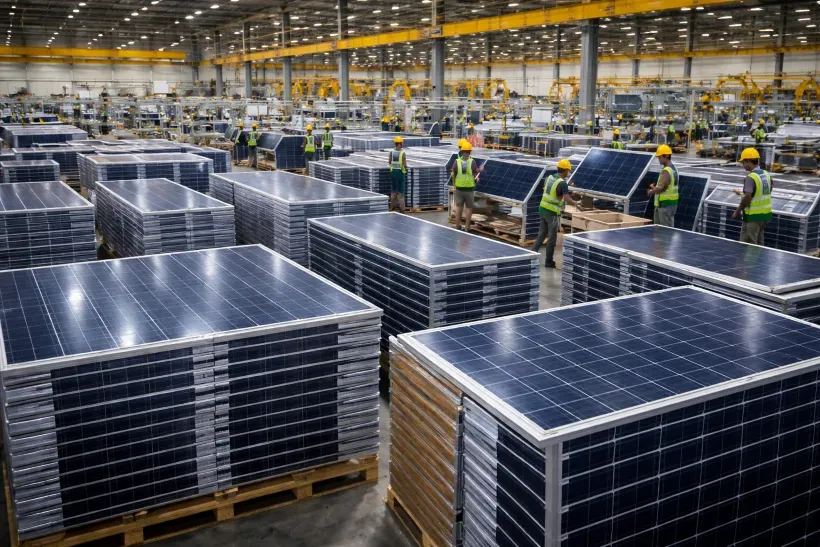
India’s solar panel manufacturing industry is undergoing a sharp correction after an unprecedented capacity surge, turning a self-reliance boom into a structural glut. According to BloombergNEF, manufacturing capacity has grown 13-fold since 2020, reaching about 154 GW (DC) by year-end - roughly triple the annual domestic demand. This expansion was driven by pandemic-era supply chain disruptions, strained China relations, government support for local manufacturing, import tariffs, and a domestic manufacturer list.
Key figures:
- Capacity increase since 2020: 13x
- Manufacturing capacity (end of year): ~154 GW
- Domestic demand (2025): 38 GW installed (~53 GW DC)
- Capacity-to-demand ratio: ~3x
Despite a record 38 GW of solar installations in 2025 (~53 GW DC), demand remains far below available capacity. Assembly plant utilization has fallen to 40%, down from over 70% prior to the US imposing tariffs that had previously supported robust exports.
- Previous utilization: >70%
- Current utilization: ~40%
The glut extends to intermediate production. ICRA expects solar cell manufacturing to reach 100 GW over the next two years - a fourfold rise - raising concerns about further oversupply, especially for new capacities coming online after mid-2027.
- Expected cell manufacturing (2 years): 100 GW (4x increase)
External pressures persist. US tariffs imposed last year impacted India’s export competitiveness. While some duties have eased, uncertainty remains, with a US industry coalition seeking tariffs up to 214% on Indian supplies.
- Proposed US tariffs: ~214%
Domestically, India still relies on China for upstream components like cells and wafers, but new rules from June require all panels sold locally to use Indian-made cells, with similar mandates for wafers by June 2028. While these policies may reshape cost structures, they risk deepening supply-demand imbalances unless demand accelerates.
About 30 GW of current capacity uses MonoPERC technology, which is nearing obsolescence as more efficient technologies emerge. Upgrading these lines requires fresh capital at a time of liquidity pressures, risking consolidation and the exit of mid-sized players.
- MonoPERC-based capacity: ~30 GW
Last year, the government urged banks to exercise caution in lending to the sector, signaling risks of overexpansion. Some analysts suggest outward expansion, such as financing solar projects in Africa using Indian-made units, as a partial solution.
EcoPulse24 Analysis:
India’s solar sector faces a structural mismatch: 154 GW of manufacturing capacity versus 53 GW DC of domestic demand. This leaves the industry reliant on exports or much faster domestic growth to avoid margin erosion. The expected surge in cell manufacturing to 100 GW adds risk unless export markets expand or trade barriers are lifted. In the medium term, the sector may consolidate around large players able to fund technological upgrades and withstand price cycles, while mid-sized firms struggle to recover investments. Gradual industry restructuring is likely, as the self-reliance boom becomes a test of market absorption capacity without a collapse in value.
Explore Related Coverage
Sources & References
Editorial Note
Disclaimer
© 2025 EcoPulse24. All rights reserved.