India Trade Deficit Surges to $27.1 Billion in February as Gulf War Drives Up Freight Costs
India's trade deficit hit $27.1 billion in February, up from $14.42 billion a year ago, as Gulf war tensions drove freight costs higher and disrupted supply chains.

EcoPulse24 | New Delhi
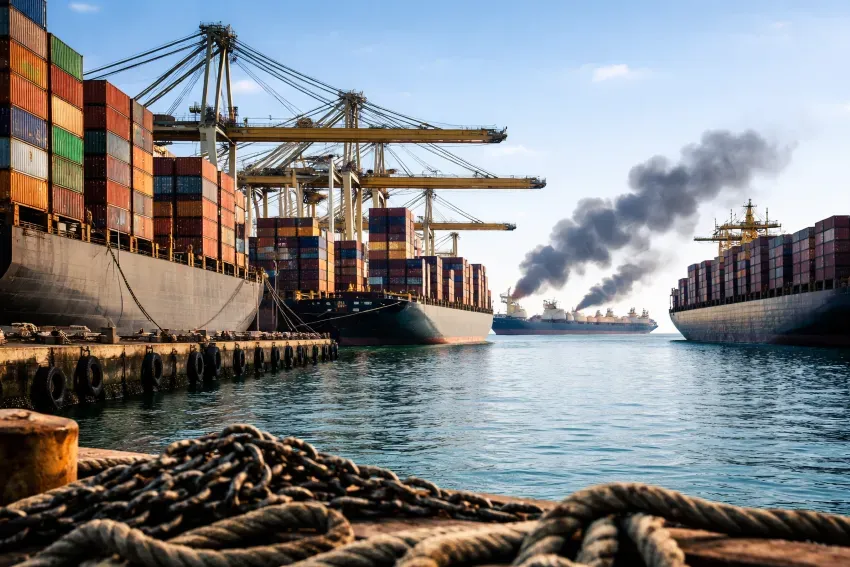
India's merchandise trade deficit widened sharply to $27.10 billion in February 2026, nearly doubling from $14.42 billion in the same month a year earlier, as the Iran war-driven disruption of Gulf shipping routes drove freight costs higher, extended delivery times, and compressed the value of exports to key West Asian markets, according to the latest trade data.
Deficit Widens as Gulf Disruptions Bite
The dramatic widening of India's trade gap, from $14.42 billion a year ago to $27.10 billion in February 2026, reflects the full impact of the Middle East conflict on one of Asia's largest trading nations. India imports approximately 87% of its crude oil, and a significant portion of its LNG, through sea lanes that pass through or near the Strait of Hormuz. With Iran intensifying attacks on energy infrastructure and commercial shipping in the region, freight rates on key India-facing routes have surged, inflating import costs while simultaneously disrupting the flow of goods to Gulf Cooperation Council (GCC) countries, which are among India's largest trading partners.
The deficit came in below market estimates of $28 billion, but the underlying trend is clearly deteriorating. Foreign investors withdrew approximately $1.01 billion from Indian equities on Monday alone, bringing total outflows in March 2026 to around $6.9 billion, as emerging market funds rotate out of Asian risk assets amid the geopolitical uncertainty.
Energy Import Bill Surges
India's energy import bill has been a primary driver of the widening deficit. Brent crude traded above $104 per barrel on Tuesday, and while India has continued to secure discounted Russian oil to mitigate the impact, the overall cost of crude imports has risen substantially. The country has also been negotiating with Iran for safe passage of six additional oil tankers, reflecting the acute pressure on its energy supply chain. Beyond crude, the higher cost of LNG spot cargoes has added to India's import burden, as power utilities seek to maintain fuel security amid supply uncertainties.
Export Challenges Amid Regional Disruption
India's export performance has also been affected, though less severely. The disruption of Gulf trade routes has increased shipping times and costs for Indian exporters targeting markets in the GCC, East Africa, and Europe. Engineering goods, pharmaceuticals, textiles, and petrochemical products - key Indian export categories - have all faced elevated logistics costs. The fuller impact of Gulf tensions on trade flows is yet to fully emerge in the data, according to trade ministry officials, suggesting the March 2026 deficit figures may show further deterioration.
BSE Sensex Holds Despite Headwinds
Indian equities displayed resilience on Tuesday, with the BSE Sensex rising approximately 0.4% to around 75,793, its second consecutive session of gains despite market volatility. Non-energy minerals, communications, and electronic technology sectors led the advance. The Reserve Bank of India (RBI) is expected to maintain its accommodative posture in the near term, though persistent currency pressure and imported inflation from high oil prices could constrain the central bank's room for further rate cuts in the coming months.
EcoPulse24 Analysis
EcoPulse24 Analysis: India's near-doubling of its trade deficit in February is a clear and measurable economic casualty of the Iran war's impact on Gulf shipping lanes. For GCC economies, India's trade deterioration has direct relevance: the GCC countries collectively represent India's largest trading partner bloc, and a sustained compression in bilateral trade flows would affect everything from remittances to investment flows and demand for Gulf petrochemicals. The data also underscores why a diplomatic resolution to the Hormuz standoff is in the economic interest of virtually every major economy in the Indo-Pacific region, including those in the Gulf. The full cost of the conflict on regional trade will only become clearer over the next two to three months of data.
Explore Related Coverage
Sources & References
Editorial Note
Disclaimer
© 2025 EcoPulse24. All rights reserved.