Jordan, United States Sign Reciprocal Trade Agreement to Strengthen Bilateral Economic Ties
Jordan and the US signed a trade deal capping tariffs at 10%, boosting market access, and expanding cooperation in digital and IP rights.

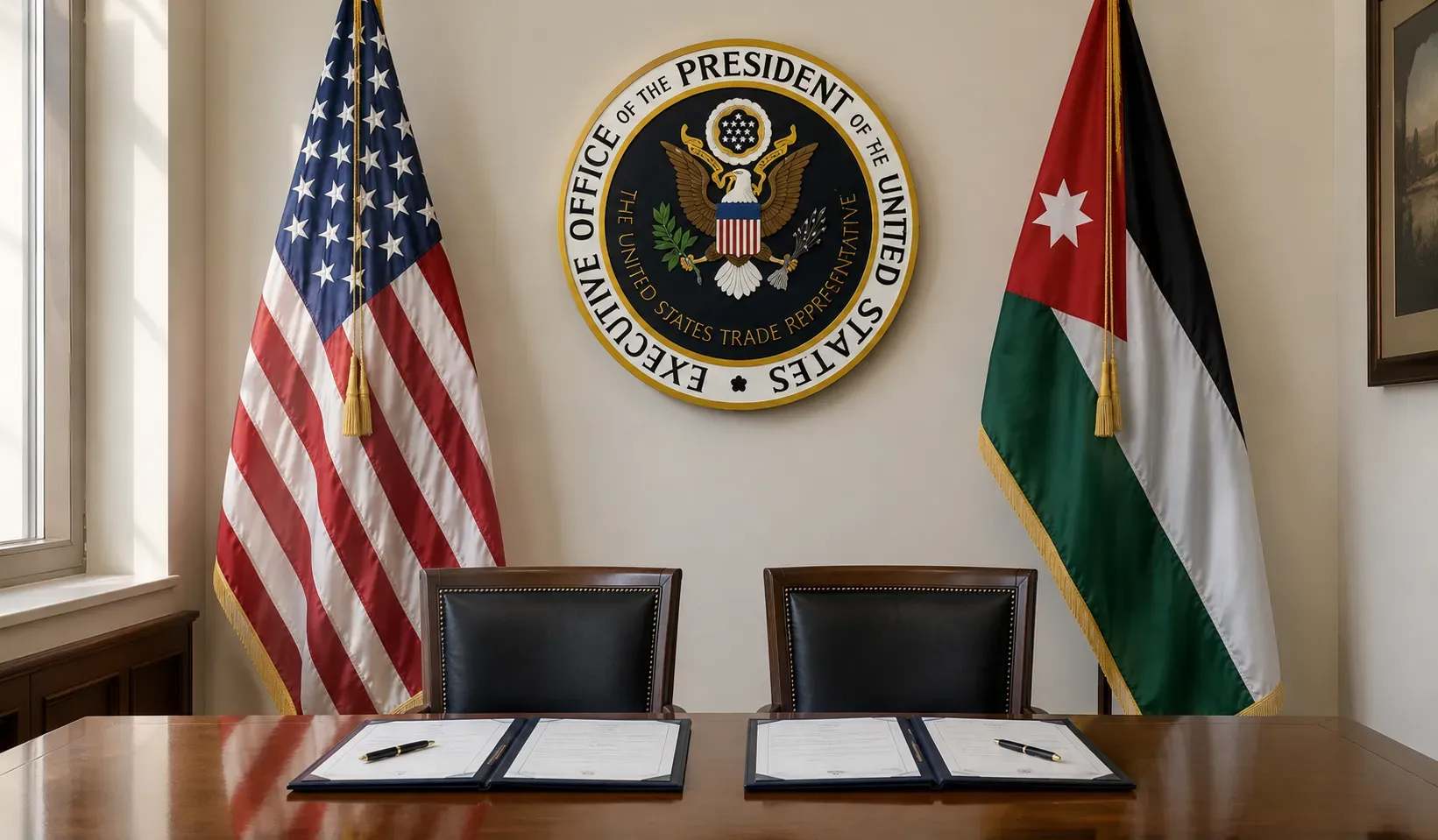
Washington | EcoPulse24
Jordan and the United States have signed a new Reciprocal Trade Agreement aimed at strengthening bilateral economic relations, expanding trade cooperation, and updating key aspects of the commercial framework between the two countries.
The agreement was signed in Washington by Jordan's Minister of Industry, Trade and Supply, Yarub Qudah, and United States Trade Representative Jamieson Greer, following nearly a year of bilateral consultations, according to Jordan's official news agency Petra.
The agreement builds upon the Jordan – United States Free Trade Agreement, which was signed in 2001 and entered into force on December 17, 2001.
United States Caps Reciprocal Tariffs at 10%
Under the agreement, the United States committed to capping reciprocal tariffs on Jordanian imports at 10%.
The measure provides Jordanian exporters with greater certainty regarding access to the U.S. market while establishing a defined ceiling for reciprocal tariff treatment.
Enhanced Access for Jordan's Garment Sector
The agreement grants Jordan's garments and apparel sector enhanced preferential access to the U.S. market.
The textile and apparel industry remains one of Jordan's largest export sectors and has been a principal beneficiary of the bilateral free trade relationship.
Jordan Maintains Duty-Free Access for U.S. Exports
Jordan will continue to provide full customs duty exemptions for U.S. exports under the framework of the 2001 Free Trade Agreement.
The agreement also provides for facilitated access to the Jordanian market for U.S. agricultural products and motor vehicles, further supporting bilateral trade.
Digital Trade, Intellectual Property and Customs Modernization
The agreement includes commitments covering several modern trade policy areas.
Jordan agreed to:
-
Refrain from imposing taxes on digital services.
-
Support the continuation of the WTO moratorium on customs duties for electronic transmissions.
-
Strengthen intellectual property rights protection.
-
Support enforcement of labor rights.
-
Support enforcement of environmental laws.
-
Modernize customs procedures to facilitate trade.
These provisions expand cooperation beyond traditional merchandise trade into regulatory and digital commerce issues.
Future Negotiations on Services and Investment
The two governments agreed to continue discussions on services and investment, indicating that negotiations will continue beyond the current agreement to deepen bilateral economic cooperation.
Jordanian Exports to the United States
According to official figures, Jordanian exports to the United States reached JOD 595 million during the first four months of 2026, underscoring the importance of the U.S. market for Jordanian manufacturers and exporters.
The United States remains one of Jordan's largest export destinations, particularly for manufactured goods, garments, and pharmaceutical products.
Recent Commercial Transactions Supporting Bilateral Relations
Jordan also highlighted several recent commercial and investment transactions that reinforce economic ties between the two countries, including:
-
Royal Jordanian's purchase of six Boeing 787-9 aircraft valued at approximately US$1.4 billion.
-
Hikma Pharmaceuticals' plan to invest US$1 billion in the United States by 2030.
-
Jordanian companies' intention to purchase more than US$300 million annually in U.S. raw materials.
Officials said these transactions further demonstrate the depth of the economic relationship between Jordan and the United States.
Background
Jordan became the first Arab country to sign a Free Trade Agreement with the United States when the agreement was concluded in 2001 and entered into force on December 17, 2001.
The new Reciprocal Trade Agreement updates elements of the bilateral trade framework while preserving the foundations established under the original Free Trade Agreement.
EcoPulse24 Analysis
The agreement represents an important update to the U.S. – Jordan trade relationship rather than a replacement of the 2001 Free Trade Agreement. By establishing a 10% ceiling on reciprocal tariffs while preserving Jordan's duty-free treatment for U.S. exports, the accord provides greater predictability for bilateral trade. Its inclusion of digital trade, intellectual property, labor, environmental, and customs provisions also reflects the broader evolution of modern trade agreements beyond tariffs alone. For Jordan, enhanced market access for the apparel sector and continued discussions on services and investment could further strengthen its export-oriented industries and long-term economic partnership with the United States.
Key Facts
| Item | Details |
|---|---|
| Agreement | Jordan – U.S. Reciprocal Trade Agreement |
| Signing Location | Washington, D.C. |
| Jordan Signatory | Yarub Qudah, Minister of Industry, Trade and Supply |
| U.S. Signatory | Jamieson Greer, United States Trade Representative |
| U.S. Reciprocal Tariff Cap | 10% |
| Jordan Garment Sector | Enhanced preferential access to the U.S. market |
| U.S. Exports to Jordan | Continue to receive full duty exemption under the 2001 FTA |
| Additional Market Access | U.S. agricultural products and motor vehicles |
| Digital Trade | Jordan will not impose taxes on digital services |
| WTO Commitment | Support continuation of the moratorium on customs duties for electronic transmissions |
| Intellectual Property | Enhanced protection commitments |
| Labor & Environment | Commitments to enforcement |
| Customs | Modernization and trade facilitation |
| Future Talks | Services and investment |
| Jordanian Exports to the U.S. (First Four Months of 2026) | JOD 595 million |
| Supporting Commercial Transactions | Royal Jordanian: six Boeing 787-9 aircraft (~US$1.4bn); Hikma Pharmaceuticals: US$1bn U.S. investment by 2030; Jordanian companies: planned purchases of more than US$300m annually in U.S. raw materials |
Explore Related Coverage
Sources & References
Editorial Note
Disclaimer
© 2025 EcoPulse24. All rights reserved.