LNG Boom Redraws the Global Energy Map in 2025 – 2026
Global LNG supply surges in 2025 – 2026, led by US, Qatar, and UAE, easing market tightness but volatility risks remain, says IEA report.

Washington | EcoPulse24
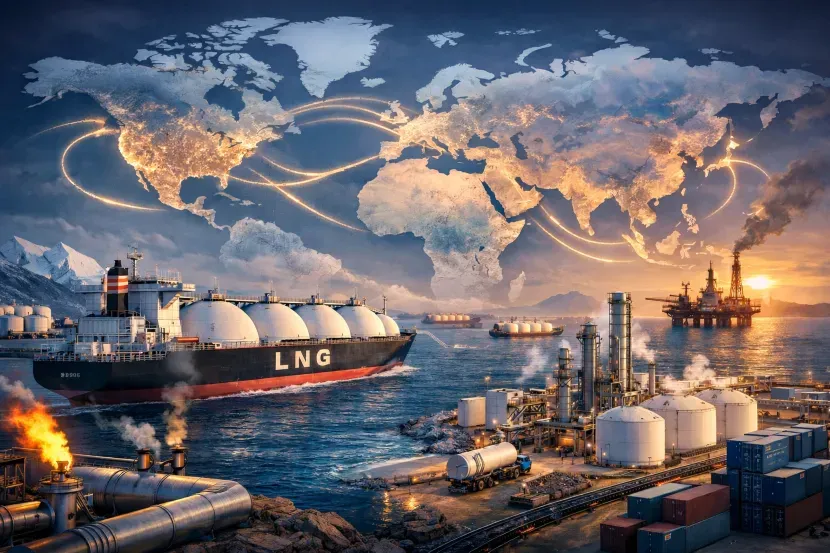
The liquefied natural gas (LNG) market is undergoing an unprecedented expansion, with robust supply growth in 2025 and an expected acceleration in 2026, driven by massive investments in liquefaction projects led by the United States, alongside a growing role for Gulf nations, particularly Qatar and the UAE.
According to the Gas Market Report – Q1-2026 by the International Energy Agency, global LNG supplies rose by approximately 7% in 2025 - about 38 billion cubic meters - with most of the increase concentrated in the second half of the year. This helped ease previous market tightness.
Fastest Growth Since 2019 Expected in 2026
The report forecasts that growth will accelerate further in 2026 to achieve the fastest rate since 2019, with an additional increase of over 7% (exceeding 40 billion cubic meters), as new production capacities come online. North America is expected to account for more than 85% of global supply growth next year.
US Leads LNG Investment Surge
The United States led final investment decisions (FIDs) in LNG projects in 2025, approving capacities exceeding 80 billion cubic meters per year - the highest ever recorded in the US industry. This cements its position as the world’s leading LNG supplier in the coming years.
Regional Focus: Qatar and the UAE
Regionally, Qatar and the UAE have emerged as key players in the LNG market through production expansions and long-term contracts, especially with Europe and Asia, as these markets seek to diversify away from Russian gas. The IEA notes that the Middle East maintains its influence in oil-linked gas contracts, while North America sees a rise in gas-indexed agreements.
More Liquid Market, Continued Volatility
While increased supplies are helping to stabilize the market and enhance energy security, the report warns that geopolitical tensions and climatic factors could sustain high price volatility. Therefore, cooperation between producers and consumers remains crucial for global gas market stability.
Explore Related Coverage
Sources & References
Editorial Note
Disclaimer
© 2025 EcoPulse24. All rights reserved.