New Zealand Proposes First LNG Import Terminal to Boost Energy Security and Reduce Coal Dependence
New Zealand plans its first LNG import terminal by 2027-28 to boost energy security and cut coal use amid declining domestic gas supplies.

New Zealand | EcoPulse24
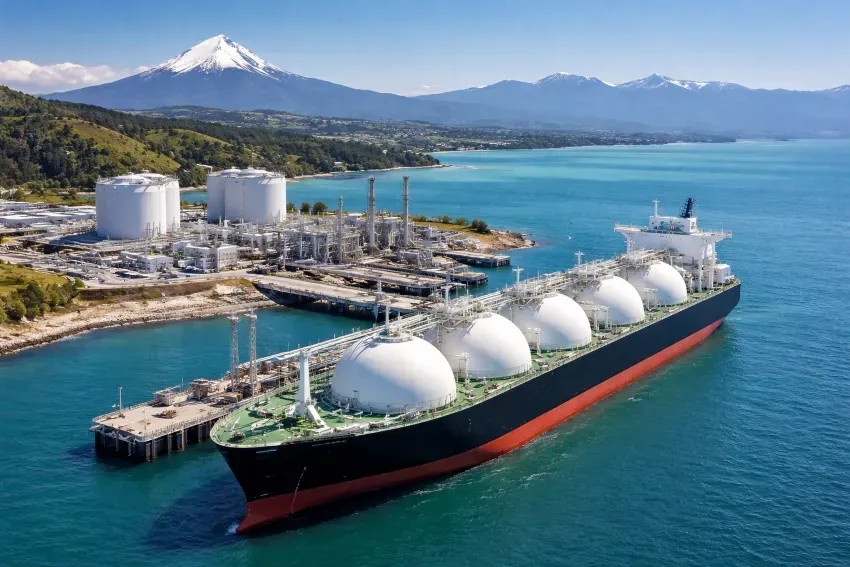
The New Zealand government has announced a set of final proposals to construct the country's first liquefied natural gas (LNG) import terminal, a step aimed at strengthening energy security and reducing dependence on more polluting sources such as coal and diesel. Energy Minister Simeon Watts stated that the terminal could be operational by 2027 or early 2028, with the government aiming to sign the execution contract by mid-year. The terminal is to be located in Taranaki, on the North Island.
Watts explained that while New Zealand is experiencing a boom in renewable electricity generation, the rapid decline in domestic gas supplies has made the electricity sector more vulnerable during drought years, when hydroelectric dam water levels drop. This situation has increased reliance on coal and diesel, resulting in higher electricity prices, greater pressure on households, and reduced business competitiveness.
This move aligns with a broader global trend of countries turning to LNG imports to offset declining domestic production, joining the path taken by traditional producers such as Malaysia and Indonesia. At the same time, natural gas is being reintroduced as a transitional fuel that provides stable, round-the-clock supply to support intermittent renewable sources.
In parallel, the government released an independent analysis by consulting firm Sense Partners, which showed that rising energy prices have had a tangible impact on the New Zealand economy, causing an estimated loss of NZ$5.2 billion in GDP during 2025. This strengthens the case for accelerating energy infrastructure projects.
EcoPulse24 Analysis:
New Zealand's move towards LNG imports reflects a pragmatic shift in balancing supply security with energy transition goals. Despite expansion in renewables, the heavy reliance on hydroelectricity remains weather-dependent, necessitating a flexible and stable source. The introduction of LNG may ease price volatility and reduce the need to revert to coal during periods of stress, but it also raises questions about long-term import costs and the role of gas as a transitional rather than permanent solution, especially as global investments in storage and clean energy accelerate.
Explore Related Coverage
Sources & References
Editorial Note
Disclaimer
© 2025 EcoPulse24. All rights reserved.