Oil Climbs Above $96 as Middle East Supply Risks Overshadow OPEC+ Output Increase
all incoming missiles were intercepted and no casualties were reported. However, the latest exchange underscored the continuing risk of escalation

London | EcoPulse24
Brent crude futures climbed above $96 per barrel on Monday, recovering from two consecutive sessions of losses as renewed geopolitical tensions in the Middle East reignited concerns over global energy supplies and reinforced fears that disruptions across key export routes could persist despite efforts by OPEC+ to increase production.
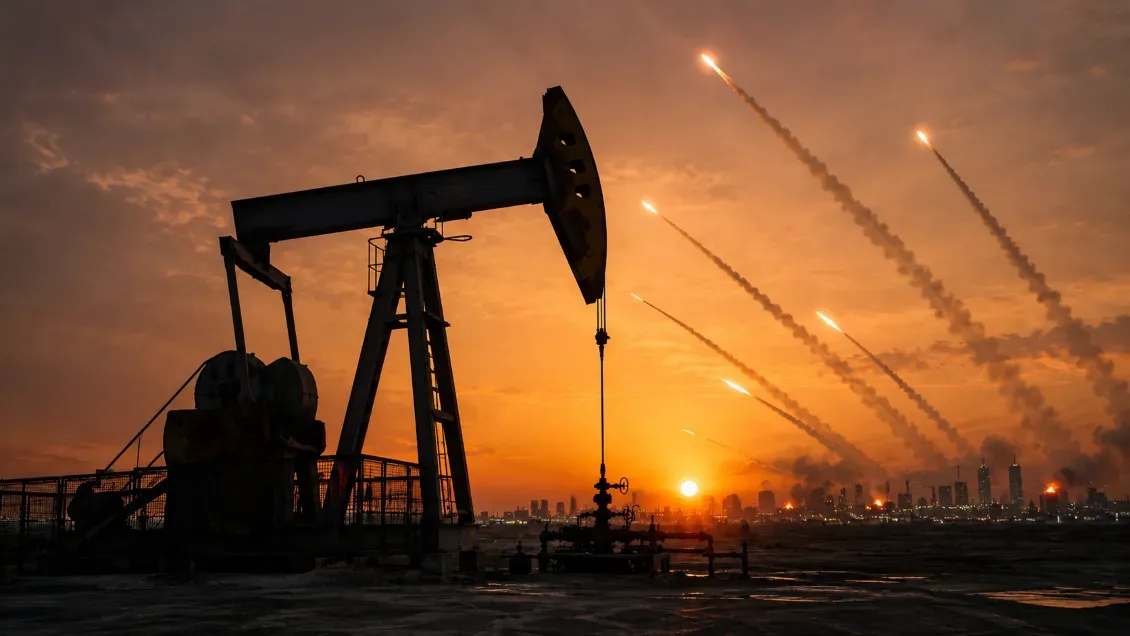
The rebound came after Iran launched multiple rounds of missiles toward Israel, warning against further military operations in Lebanon and raising fresh questions about the durability of a fragile ceasefire framework that has struggled to gain momentum amid stalled diplomatic negotiations.
According to Israeli military statements, all incoming missiles were intercepted and no casualties were reported. However, the latest exchange underscored the continuing risk of escalation across the region at a time when energy markets remain highly sensitive to any threat affecting oil supply chains.
Trump Calls for Restraint
The geopolitical backdrop was further complicated by remarks from U.S. President Donald Trump, who reportedly criticized Israeli strikes on Beirut and indicated that he would urge Prime Minister Benjamin Netanyahu to avoid retaliatory military action against Iran.
Trump also called on Tehran to return to negotiations, signaling continued efforts by Washington to prevent the conflict from expanding into a broader regional confrontation.
While markets welcomed signs of diplomatic engagement, traders remained focused on the possibility that any further escalation could affect energy infrastructure, shipping routes, and crude exports across the Gulf region.
Hormuz Remains the Critical Variable
Beyond the military headlines, energy markets continue to monitor the ongoing disruption surrounding the Strait of Hormuz, one of the world's most strategically important energy corridors.
The prolonged near-closure of the waterway has significantly constrained the movement of crude oil and petroleum products from the Persian Gulf, contributing to supply shortages and maintaining upward pressure on global energy prices.
The Strait of Hormuz serves as a vital transit route for a substantial portion of the world's seaborne oil exports. Any prolonged disruption carries implications not only for oil-producing nations but also for inflation, manufacturing costs, transportation networks, and global economic growth.
For traders, the issue is increasingly less about short-term military exchanges and more about whether energy flows through the region can return to normal levels.
OPEC+ Increases Output, But Markets Focus Elsewhere
The latest price gains came despite OPEC+ approving another increase in production targets.
The alliance agreed to raise July output quotas by 188,000 barrels per day, marking the fourth consecutive increase since April as producers attempt to restore supply to global markets.
Under normal circumstances, higher production targets would be expected to weigh on oil prices.
However, the market response suggests that investors remain more concerned about actual supply availability than official production quotas.
Many analysts note that quota increases cannot fully offset supply disruptions if transportation bottlenecks, regional instability, or logistical constraints continue to limit the delivery of physical barrels to consumers.
As a result, traders largely interpreted the OPEC+ decision as insufficient to eliminate the broader supply risks currently embedded in oil markets.
Energy Markets Enter a New Phase
The recent behavior of oil prices reflects a shift in market psychology.
For much of the past year, investors focused on economic growth, demand forecasts, and central-bank policy when assessing oil prices.
Today, geopolitical risk has once again become a dominant driver.
The combination of military tensions, shipping disruptions, and uncertainty surrounding Middle East energy exports has pushed risk premiums back into crude markets, even as producers attempt to increase supply.
That dynamic helps explain why oil prices have remained elevated despite production increases and ongoing concerns about global economic growth.
What Higher Oil Prices Mean for the Global Economy
The move above $96 per barrel has implications far beyond energy markets.
Higher crude prices can feed directly into transportation costs, manufacturing expenses, and consumer inflation, potentially complicating policy decisions for central banks already navigating an uncertain economic environment.
For countries that import large volumes of energy, sustained oil prices near or above current levels could increase inflationary pressures and slow economic activity.
Conversely, oil-exporting economies may benefit from stronger fiscal revenues and improved trade balances if elevated prices persist.
Financial markets will also be watching whether rising energy costs begin to influence expectations for interest rates, particularly as policymakers assess the inflationary consequences of ongoing geopolitical tensions.
EcoPulse24 Analysis
The most important signal from Monday's oil rally is not the missile exchange itself - it is the market's reaction to it.
Oil prices moved higher despite a new OPEC+ production increase, a development that would typically help ease concerns about supply. This suggests traders are assigning greater weight to geopolitical and logistical risks than to announced increases in production quotas.
The Strait of Hormuz remains the central issue. As long as uncertainty surrounds one of the world's most important energy transit corridors, markets are likely to maintain a substantial risk premium in crude prices.
The situation also highlights a broader shift taking place across global markets. Investors are increasingly treating energy security as a strategic variable rather than a cyclical commodity factor. In that environment, disruptions to shipping routes, regional stability, and energy infrastructure can have a greater impact on pricing than traditional supply-and-demand calculations.
For the second half of 2026, the trajectory of oil prices may depend less on how many barrels OPEC+ agrees to produce and more on whether those barrels can move safely and reliably through the world's most critical energy corridors.
Sources & References
Masadir Economics
Editorial Note
Disclaimer
© 2025 EcoPulse24. All rights reserved.