Peace Trade Ignites Global Markets as Oil Plunges, Bitcoin Surges and Gold Jumps
Oil plunged, Bitcoin surged above $67,000, gold jumped and global stocks rallied as markets priced the economic impact of a US-Iran peace agreement.

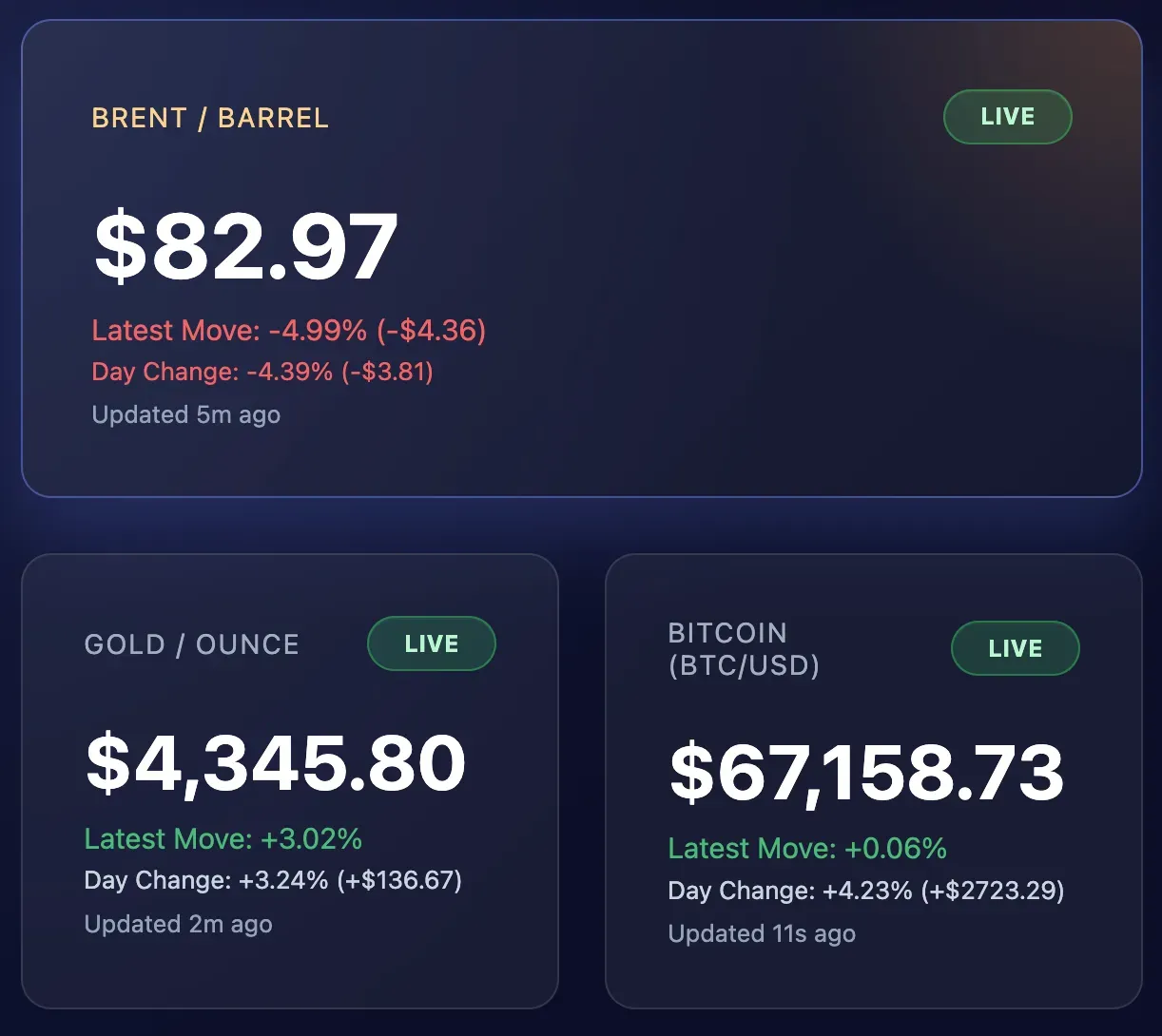
Global Markets | EcoPulse24
Global financial markets staged a powerful relief rally on Monday after President Donald Trump announced that the United States and Iran had reached a peace agreement that would reopen the Strait of Hormuz and restore energy exports from the Gulf.
The reaction was immediate and broad-based, stretching across commodities, cryptocurrencies, equities, currencies, and bonds, as investors rapidly reassessed the geopolitical and economic outlook.
Unlike a typical market move driven by a single asset class, Monday's rally reflected a sweeping repricing of risk across the global financial system.
Oil Leads the Repricing Lower
The most dramatic move occurred in energy markets.
US crude oil fell 5.69% to around $80.05 per barrel, while Brent crude declined 5.29% to approximately $82.71 per barrel.
The selloff reflects expectations that the reopening of the Strait of Hormuz could restore smoother energy flows through one of the world's most critical oil and gas transit routes.
For months, oil prices carried a substantial geopolitical premium as traders priced in the possibility of prolonged disruptions to Middle Eastern supply.
That premium is now rapidly unwinding.
Bitcoin Climbs as Risk Appetite Returns
Bitcoin surged above $67,000, gaining more than 4% on the day and reaching its highest levels in nearly two weeks.
The move signals a sharp improvement in investor sentiment as markets rotate back toward risk assets.
The cryptocurrency's rally also comes amid renewed inflows into spot Bitcoin ETFs and growing optimism that easing energy pressures could improve the broader macroeconomic backdrop for financial markets.
Gold Defies Traditional Expectations
One of the most surprising developments was gold's strong advance.
Spot gold climbed more than 3% to roughly $4,355 per ounce, even as geopolitical tensions eased.
Traditionally, gold tends to weaken when investors move away from safe-haven assets. However, Monday's rally suggests investors may be responding to a broader combination of factors, including currency movements, portfolio diversification, and shifting expectations for global monetary policy.
The simultaneous rise in both gold and Bitcoin highlights the complexity of the current market environment.
Dollar Weakens as War Premium Fades
The US Dollar Index (DXY) slipped toward 99.57, extending recent weakness as traders reassessed inflation and interest-rate expectations.
A sustained decline in energy prices could reduce inflationary pressures globally, potentially easing concerns that central banks may need to maintain tighter monetary policies for longer.
Equities Join the Rally
The positive sentiment spread quickly to stock markets.
US equity futures jumped sharply, while Asian and European markets also moved higher.
Technology and artificial intelligence-related stocks led gains, benefiting from:
-
Lower bond yields
-
Improved risk appetite
-
Expectations of softer inflation
-
Better financial conditions
Investors increasingly view the potential normalization of Middle Eastern energy flows as supportive for global growth.
Markets Are Pricing a Different World
The significance of Monday's move lies not only in the magnitude of individual price changes but in the breadth of the reaction.
Oil fell.
Stocks rose.
Bitcoin rallied.
The dollar weakened.
Bond yields declined.
Taken together, these moves point to a market rapidly transitioning from a wartime macroeconomic framework toward a peace-driven economic outlook.
EcoPulse24 Analysis
Financial markets are sending a clear message: investors are beginning to price peace as a macroeconomic catalyst.
For months, markets operated under assumptions of elevated geopolitical risk, disrupted energy flows, persistent inflation concerns, and tighter financial conditions.
The prospect of a US-Iran agreement changes that equation.
Lower energy prices could ease inflation pressures, improve household purchasing power, reduce costs for businesses, and support a more favorable environment for risk assets.
Whether this becomes a lasting trend will depend on the formal signing of the agreement and its implementation in the coming days.
For now, however, global markets appear to be embracing a new narrative:
The unwinding of conflict may be becoming one of the most powerful economic forces of 2026.
Sources & References
Editorial Note
Disclaimer
© 2025 EcoPulse24. All rights reserved.