Global Markets Face Critical Test After US Strikes on Iran and Risks of Hormuz Closure
US-Iran conflict sparks global market turmoil, oil price surge risk, and inflation fears; focus on Strait of Hormuz disruption and safe havens.

Dubai | EcoPulse24
Global markets have entered a phase of comprehensive risk repricing after the United States announced extensive military operations inside Iran, followed by a wave of Iranian military responses targeting Israel and other regional countries, including attacks on facilities and military bases in several Gulf states. These fast-moving developments have placed energy, supply chains, and global inflation at the heart of the crisis, as investors prepare for a decisive trading session at the start of the week.
Risk Focus: Oil and the Strait of Hormuz
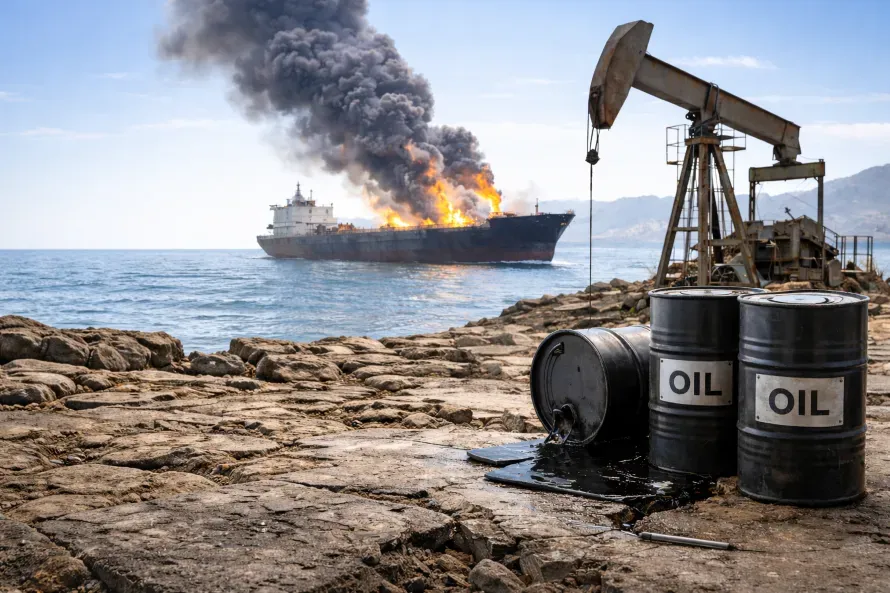
Oil markets are the main focal point in this crisis. Brent crude was trading near $73 per barrel at the end of the week, up about 20% since the start of the year. Expectations point to a potential price gap upward when futures reopen, with estimates of an immediate $5 – $7 increase if escalation continues.
The Strait of Hormuz is the most sensitive factor. About 13 million barrels per day of crude passed through the strait in 2025, accounting for around 31% of global seaborne oil flows, with a total of nearly 20 million barrels per day of oil and products - about 20% of global demand. Any actual disruption could trigger a sharp buying rush, especially among major Asian importers.
The most severe scenario would be attacks on non-Iranian Gulf oil exports, which approach 18 million barrels per day. In this case, price spikes could surpass $100 per barrel, potentially reigniting global inflationary pressures by adding 0.6 to 1 percentage point to inflation rates, according to estimates from international financial institutions.
Stocks and Currencies: A Return to Safe Havens
Markets are bracing for a risk-off opening. Early estimates suggest global equities may drop 1% – 2%, with greater sensitivity in cyclical and high-risk sectors. Asian markets are especially exposed due to their reliance on stable energy supplies and maritime trade routes.
In the Gulf, the Dubai and Saudi stock exchanges are seen as the first direct test of regional risk pricing. The recent dip in the Saudi index reflects the start of repositioning, while local investor liquidity will be crucial in determining the depth of any correction.
On the defensive asset front, the Swiss franc has risen about 3% since the start of the year, while gold posted gains exceeding 20% in 2026, amid expectations it may test new record highs if tensions persist. Conversely, cryptocurrencies are no longer viewed as traditional safe havens during geopolitical shocks, due to their continued high volatility.
Decisive Factor: Duration of Conflict
Historically, markets have shown a capacity for rapid recovery if escalation is contained swiftly, as seen in previous rounds of tension. However, any prolonged conflict or actual disruption in energy flows could shift the shock from a “geopolitical event” to a broader economic crisis, including slower growth and renewed energy-driven inflation concerns.
EcoPulse24 Analysis:
The current phase is a dual test for Gulf markets: testing the resilience of financial infrastructure and local liquidity, and testing the ability of energy markets to absorb a geopolitical shock in one of the world’s most sensitive corridors. Monday’s session will not be just about price movement, but a direct reading of investor preparedness to bear risk amid heightened uncertainty. Oil’s trajectory over the next 48 hours will set the course for inflation and, consequently, monetary policy and market trends for the rest of the year.
Explore Related Coverage
Sources & References
Editorial Note
Disclaimer
© 2025 EcoPulse24. All rights reserved.