Strong Surge in Egypt’s Non-Oil Exports in 2025 Narrows Trade Deficit, Driven by Gold and Building Materials
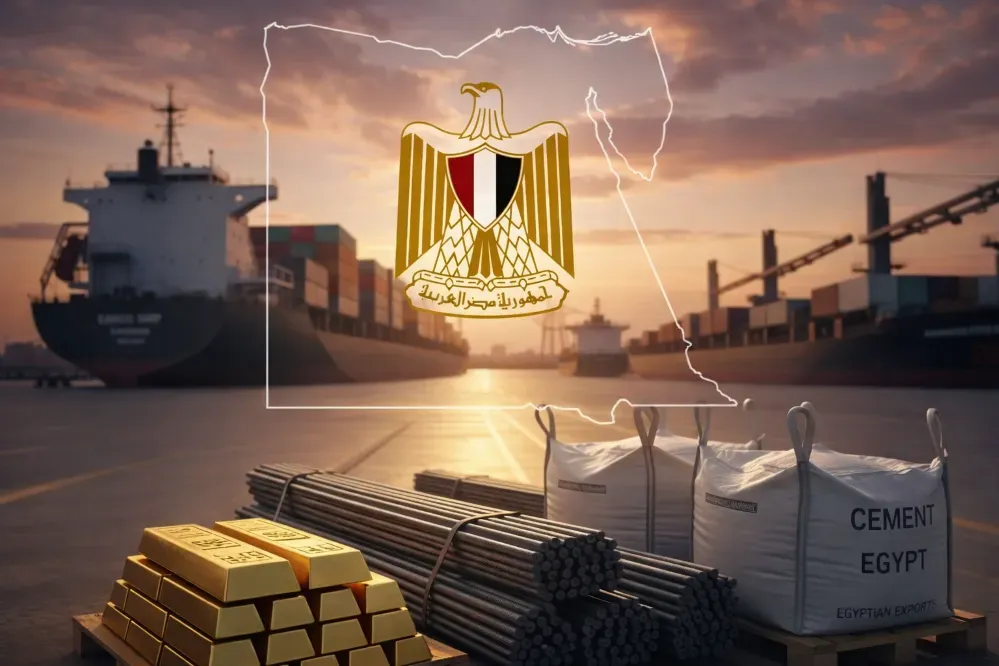
Egypt's non-oil exports rose 17% in 2025, led by gold and building materials, cutting the trade deficit by 9% to $34.4B.

Cairo | EcoPulse24
Egypt’s non-oil exports witnessed strong growth in 2025, rising by 17% year-on-year to approximately $48.5 billion, up from $41.5 billion in 2024. This performance highlights a notable improvement in the structure of foreign trade and diversification of export income sources.
The Ministry of Investment and Foreign Trade reported that imports grew at a slower pace, reaching about $83 billion in 2025 compared to $79.3 billion the previous year, a 5% increase. This slower growth in imports helped ease pressure on the trade balance.
According to official data, Egypt’s trade deficit decreased by 9% in 2025 to $34.4 billion, down from $37.8 billion in 2024, supported by faster export growth relative to imports.
Gold Leads Export Growth
Gold exports emerged as a key driver, surging to around $7.6 billion, up from $3.2 billion in 2024, a $4.4 billion annual increase amid higher global prices and rising external demand.
The data also showed clear diversification in non-oil export structure. The building materials sector topped the list at $14.8 billion, followed by chemicals and fertilizers at $9.4 billion, and food industries at $6.8 billion.
Other contributing sectors included engineering and electronics ($6.4 billion), agricultural products ($4.6 billion), ready-made garments ($3.3 billion), along with textiles, medical industries, printing and packaging, home furnishings, furniture, and leather goods.
Main Export Markets
Egypt’s non-oil exports in 2025 were distributed across several key markets, led by the UAE, Turkey, Saudi Arabia, Italy, and the United States, reflecting Egypt’s expanding regional and global presence.
According to the ministry, the government targets raising annual exports to $145 billion, reducing the trade deficit, and improving Egypt’s ranking among the top 50 countries in global trade indices by facilitating procedures, maximizing trade agreements, and protecting local industry within international frameworks.
EcoPulse24 Analysis
The robust non-oil export performance in 2025 signals structural improvements in Egypt’s ability to generate foreign currency outside the energy sector, with gold and building materials as key growth drivers. The sharp increase in gold exports reflects both higher global prices and improved sectoral export capabilities.
The 9% reduction in the trade deficit is a positive development, though the gap between imports and exports remains significant. Nevertheless, the slower growth in imports relative to exports suggests a relative improvement in trade balance, supporting currency stability and easing funding pressures.
Strategically, the main challenge remains sustaining this growth, particularly in high value-added sectors, and shifting from price-driven growth to expansion based on productivity and competitiveness. Egypt’s success in this area will determine its progress toward the $145 billion annual export target in the coming years.
Explore Related Coverage
Sources & References
Editorial Note
Disclaimer
© 2025 EcoPulse24. All rights reserved.