Warsh's Fed Begins Rewriting the Central Bank Playbook as Hawkish Shift Reprices Global Markets
Warsh's first Fed meeting left rates unchanged but raised inflation forecasts, lifting the dollar and yields while pressuring gold and crypto.

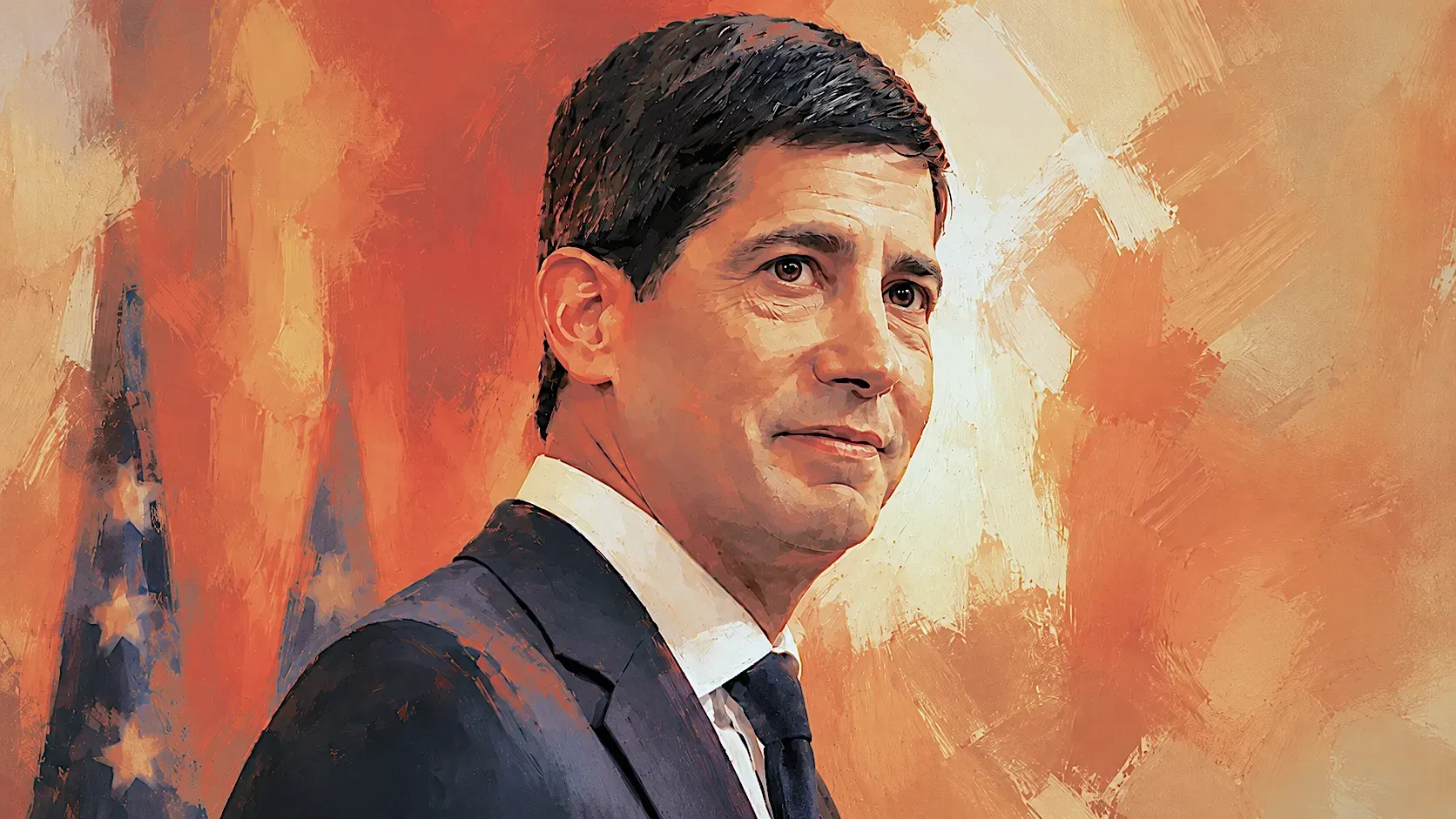
Dubai | EcoPulse24
The Federal Reserve left its benchmark interest rate unchanged on Wednesday at 3.50%-3.75%, marking its fourth consecutive meeting without a policy move in the first gathering chaired by new Federal Reserve Chairman Kevin Warsh, who assumed office on May 22.
The rate decision itself was largely expected and had been priced in by markets with a probability exceeding 97%, according to the CME FedWatch Tool. The real surprise came from the Fed's updated economic projections and Warsh's broader vision for reshaping how the central bank communicates with markets - developments that triggered simultaneous repricing across currencies, bonds, precious metals, equities and digital assets.
A Hawkish Dot Plot Reverses the Market Narrative
The Federal Reserve's latest Summary of Economic Projections revealed a markedly more hawkish outlook than markets had anticipated.
Nine policymakers now expect at least one quarter-point rate increase before the end of this year, while six foresee two or more hikes. Another nine officials expect either no move or lower rates.
The projections represented a sharp reversal from market expectations only weeks ago, when investors were still debating the possibility of rate cuts later this year.
At the same time, the Fed significantly upgraded its inflation forecasts. Policymakers raised their median projection for 2026 PCE inflation to 3.6%, up from 2.7% in March, while core PCE inflation was revised to 3.3% from 2.7%.
The revised projections reflect an inflation backdrop that has become increasingly complex. Recent data showed several measures of consumer and producer inflation accelerating to their fastest pace in more than three years, amid higher energy prices linked to the Middle East conflict and continuing price pressures associated with the massive global investment cycle in artificial intelligence infrastructure.
The stronger inflation outlook, combined with resilient labor market data, forced investors to rapidly reassess the expected path of US monetary policy.
Warsh Signals a New Operating Philosophy for the Fed
Perhaps the most consequential development of the meeting was not the interest-rate decision itself, but the signals Chairman Warsh sent about the future of the Federal Reserve's communication framework.
In a striking break from recent practice, Warsh did not submit his own interest-rate projection in the Fed's famous "dot plot."
"I didn't put in a dot. For me, it's not useful in conducting policy," Warsh said.
However, he encouraged other policymakers to continue submitting their forecasts and stressed that the future of the dot plot itself would be evaluated as part of a broader institutional review rather than abolished outright.
Warsh also dramatically shortened the post-meeting policy statement. The latest statement contained approximately 130 words, down from 341 words in April, stripping away much of the interpretive language traditionally used to explain the central bank's assessment of economic conditions.
Instead, Warsh said he wants Fed communications to present "the facts as best we judge them."
In perhaps the clearest indication yet of his reform agenda, Warsh announced the creation of five independent task forces that will review:
-
Federal Reserve communications;
-
The central bank's balance sheet;
-
Data sourcing and economic measurement;
-
Productivity and labor market dynamics amid technological change;
-
The inflation framework itself.
The task forces will include both internal and external experts and are expected to deliver recommendations by the end of this year.
Commenting on the Fed's inflation credibility, Warsh acknowledged shortcomings in recent years.
"Our commitment to delivering price stability is strong, unified and unambiguous. Frankly, that's a message I think we missed for five years, and we're going to fix it."
Dollar Climbs to Three-Month High
The US Dollar Index rose above 100.3, reaching its highest level since March.
The move reflected an immediate repricing of the future rate path as markets adjusted to a Federal Reserve that suddenly appeared considerably more hawkish than anticipated.
The greenback posted its largest gains against the euro and British pound as investors increased expectations that US interest rates may remain elevated for longer.
Treasury Yields Reverse Course
US Treasury yields also repriced sharply.
The yield on the benchmark 10-year Treasury note rebounded toward 4.46%, erasing earlier declines, while shorter-dated yields rose more aggressively as traders recalibrated expectations for potential rate increases later this year.
Higher yields signaled a renewed market belief that inflation risks remain persistent despite growing hopes that geopolitical tensions in the Middle East could eventually ease.
Gold and Silver Retreat as Yields and Dollar Rise Together
Precious metals came under pressure as rising real yields and a stronger US dollar simultaneously reduced their relative attractiveness.
Masadir Economics data showed gold declining as much as 1.76% to $4,255.02 per ounce at one point during the session. However, other market reports recorded a more modest decline of around 0.8% later in the day.
The discrepancy reflects differences in observation times within an exceptionally volatile trading session rather than disagreement over the direction of the move itself.
Silver also moved lower, extending losses as investors shifted toward interest-bearing assets.
US Equities Reprice in Real Time
US stocks experienced significant intraday volatility rather than a uniform selloff.
At one stage of trading, the S&P 500 declined around 0.5% while the Nasdaq dropped roughly 1%. However, major indices later recovered a substantial portion of their losses as investors absorbed additional details from Warsh's press conference and his institutional reform plans.
Beneath the headline indices, market leadership diverged sharply.
The so-called Magnificent Seven technology stocks, including Meta, Microsoft, Alphabet and Amazon, led declines amid rising yields and pressure on long-duration assets.
Meanwhile, semiconductor stocks continued to rally against the broader market trend. Shares of companies including Micron, Marvell, Applied Materials and Intel posted gains exceeding 3%.
The divergence suggests investors increasingly view AI infrastructure and semiconductor companies as a separate investment cycle driven by structural capital expenditure demand rather than as conventional rate-sensitive technology stocks.
Emerging Markets Face Renewed Pressure
The simultaneous rise in the US dollar and Treasury yields carries consequences far beyond Wall Street.
Higher US yields tend to tighten global financial conditions by increasing borrowing costs and attracting capital back toward dollar-denominated assets.
For emerging economies, the repricing of US interest-rate expectations raises the risk of renewed pressure on capital flows, local currencies and external financing costs.
Crypto Markets Pull Back but Remain Focused on Forward Guidance
Digital assets also retreated.
Masadir Economics data showed Bitcoin declining 1.35% to $64,677, while Ether fell 2.20% to $1,750.71. By contrast, BNB slipped only 0.16% to $604.
The broader decline reflected tighter financial conditions, rising real yields and a stronger dollar - all conditions that typically challenge non-yielding and speculative assets.
However, market participants remained highly focused on Warsh's press conference and future policy signals rather than reacting solely to the rate decision itself.
BNB's relatively muted decline has no confirmed explanation at this stage and may reflect token-specific dynamics amid continuing uncertainty surrounding Binance's pending European licensing situation, which EcoPulse24 tracks separately. No direct causal relationship has been established.
The Geopolitical Variable That Could Rewrite the Entire Picture
Behind all of these market moves sits a potentially decisive variable: the expected signing of a preliminary US-Iran agreement on Friday.
The recent energy shock that complicated the inflation outlook was partly driven by disruptions and uncertainty stemming from the Middle East conflict.
Should the agreement hold and energy prices continue to retreat, one of the principal inflationary pressures influencing markets today could ease considerably.
That possibility creates an unusual situation for the Federal Reserve.
A central bank that has just signaled renewed hawkishness and launched a broad review of its policy framework may soon find itself confronting a rapidly changing inflation environment.
EcoPulse24 Analysis
Wednesday's meeting was not merely another Federal Reserve rate decision.
It was the first comprehensive signal that a new operating philosophy is emerging under Kevin Warsh.
The significance lies not in the fourth consecutive rate hold itself. Markets had already priced that outcome with near certainty.
What markets had not priced was the degree of hawkishness embedded in the Fed's projections, the chairman's refusal to submit his own dot-plot projection, the radical simplification of Fed communications, and the launch of five institutional reviews that collectively place the central bank's operating framework under examination.
The market reaction reflected precisely that reassessment.
The dollar strengthened. Treasury yields rebounded. Gold and cryptocurrencies retreated. Equity leadership fragmented. Emerging-market risks resurfaced.
Yet the most important question remains unanswered.
If the anticipated US-Iran agreement ultimately eases energy prices and inflationary pressures begin to recede, will the Federal Reserve's newly hawkish stance prove durable?
That may become the first - and perhaps most consequential - credibility test of the Warsh era.
Sources & References
CNN Business، CNBC، Axios، American Banker، CryptoTimes، Trading Economics
Editorial Note
Disclaimer
© 2025 EcoPulse24. All rights reserved.