BOJ Poised to Raise Rates to Highest Level Since 1995 as Inflation Risks Mount
The Bank of Japan is expected to raise interest rates to 1%, the highest level since 1995, as inflation risks and yen weakness continue to build.

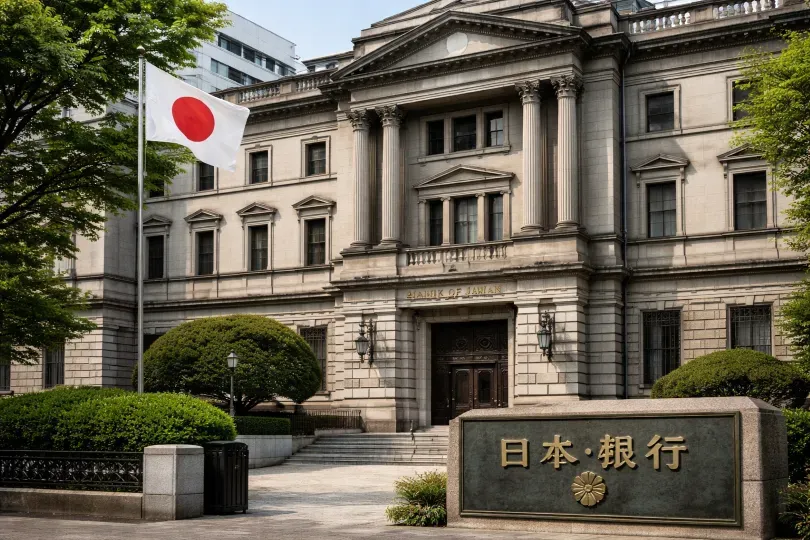
Tokyo | EcoPulse24
The Bank of Japan is widely expected to raise its benchmark interest rate to 1% this week, marking the highest policy rate in more than three decades and signaling a continued shift away from the ultra-loose monetary policies that defined Japan's economy for much of the past generation.
According to economists surveyed by Bloomberg, policymakers are expected to approve a 25-basis-point increase at the conclusion of the central bank's two-day policy meeting on Tuesday. If confirmed, the move would represent the BOJ's first rate hike since December and push borrowing costs to their highest level since 1995.
The decision comes at a particularly unusual moment, with Governor Kazuo Ueda absent from the meeting after being hospitalized for treatment related to a hepatic cyst infection. While Ueda will submit his views in writing, he will not participate in the vote, making this the first regular BOJ policy meeting held without the governor in attendance.
Inflation Pressures Intensify
The expected rate increase reflects growing concerns among policymakers that inflation risks are becoming increasingly difficult to ignore.
Rising energy costs linked to the prolonged Middle East conflict, combined with persistent weakness in the Japanese yen, have raised concerns that consumer prices could accelerate further in the months ahead.
Although recent headline inflation readings have remained below the BOJ's 2% target due in part to government subsidies, officials expect price pressures to strengthen later this year as higher import and energy costs filter through the economy.
Ueda previously indicated that consumer inflation could exceed 3% during the current fiscal year, significantly above the central bank's long-term target.
Market-based inflation expectations have also climbed sharply. Japan's 10-year breakeven inflation rate reached a record 2.35% last month and has remained near those highs, reflecting growing expectations that inflation will stay elevated over the coming decade.
Yen Weakness Adds to Policy Challenges
Currency markets remain another major concern for Japanese policymakers.
The yen continues to trade near 160 per dollar, a level that previously triggered large-scale government intervention in foreign-exchange markets.
Despite record efforts by authorities to support the currency, the yen has struggled to recover meaningfully against the dollar, increasing import costs for a country heavily dependent on foreign energy and raw materials.
Analysts warn that a prolonged period of yen weakness could further amplify inflationary pressures and force policymakers to adopt a more restrictive stance.
"The BOJ may eventually face a difficult choice between supporting domestic demand and preventing further yen depreciation," said Shigeto Nagai, Head of Japan Economics at Oxford Economics and former head of the BOJ's international department.
Global Central Banks Shift Toward Tightening
The BOJ's expected move comes amid signs that several major central banks are becoming increasingly concerned about inflation risks.
The European Central Bank recently became the first major central bank to raise interest rates since the outbreak of the US-Iran conflict, while traders have also increased expectations that the Federal Reserve could tighten policy again before year-end.
Against that backdrop, maintaining an overly accommodative stance risks placing additional downward pressure on the yen through widening interest-rate differentials.
Even after a move to 1%, Japan would still maintain one of the lowest policy rates among developed economies.
Focus Turns to Bond Purchases
Beyond interest rates, investors will closely monitor any signals regarding the BOJ's massive bond-buying program.
The central bank currently reduces government bond purchases by approximately ¥200 billion per quarter, but officials are reportedly considering slowing the pace of reductions or even pausing the process as market conditions stabilize.
The issue remains highly sensitive because the BOJ owns roughly half of Japan's outstanding government debt following more than a decade of aggressive monetary stimulus.
Recent volatility has underscored the challenge. Japan's 10-year government bond yield climbed to its highest level since 1996 earlier this year, highlighting growing pressure within the country's fixed-income market.
Markets Await Future Guidance
While a rate increase is largely priced into financial markets, investors will be focused on the central bank's guidance regarding future policy moves.
Questions remain over whether Tuesday's decision represents a one-off adjustment or the beginning of a broader tightening cycle.
The absence of Governor Ueda is also likely to place additional attention on Deputy Governor Shinichi Uchida, who will lead the post-meeting press conference and explain the central bank's outlook.
For global investors, the significance extends far beyond Japan.
A shift in Japanese monetary policy has implications for currency markets, sovereign bond yields, global capital flows, and broader risk sentiment - making this week's BOJ meeting one of the most closely watched macroeconomic events of the month.
Sources & References
Editorial Note
Disclaimer
© 2025 EcoPulse24. All rights reserved.