Qatar Extends LNG Force Majeure to July as War Disruption Cuts 17% of Export Capacity
Qatar extends LNG force majeure to July, disrupting 17% of exports and cutting Italy's supply by a third amid Gulf conflict.

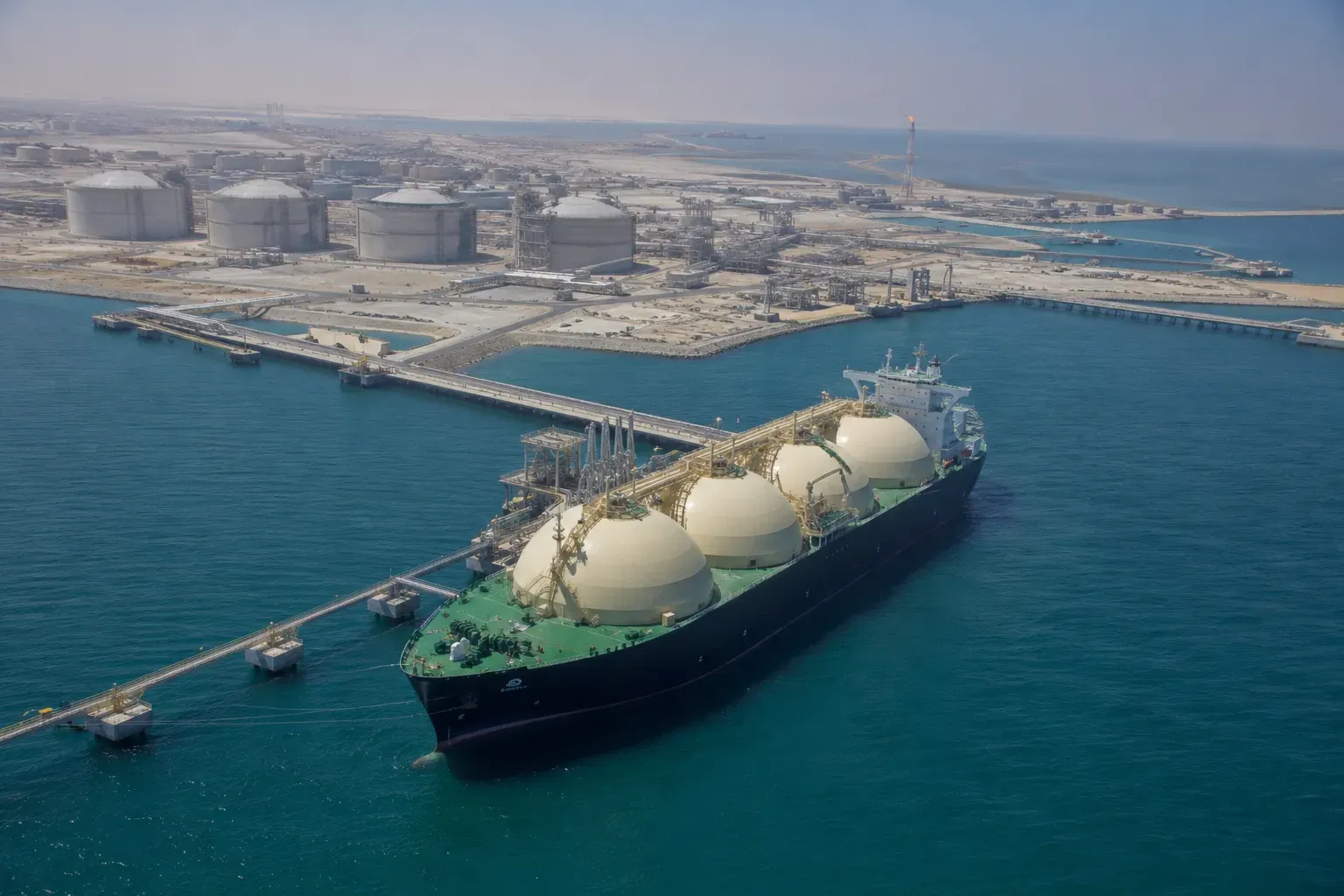
EcoPulse24 | Dubai
Qatar Energy has notified Italy's Edison of two additional cancelled LNG shipments, extending its force majeure declaration into early July 2026 - bringing the total number of cancelled deliveries to twelve since the outbreak of the US-Israeli conflict with Iran, according to Reuters.
The extension is the latest chapter in a supply disruption that has materially altered the global LNG market's short-term dynamics, exposing the structural vulnerability of European energy security to conflict in the Persian Gulf.
Key Facts - Source: Reuters via CNBC Arabia, May 5, 2026
| Item | Detail |
|---|---|
| Additional cancelled shipments | 2 |
| Total cancelled since war began | 12 shipments |
| Force majeure extended until | Early July 2026 |
| Qatar's export capacity disrupted | 17% |
| Expected delivery reduction | One third of annual contracted volumes |
| Edison-QatarEnergy contract | 6.4 billion cubic metres per year |
| Share of Italy's annual gas consumption | 10% |
| Compensated shipments | 8 shipments (~1 billion cubic metres) |
| EDF decision | Postponed Edison stake sale due to supply disruption |
The Supply Chain in Numbers
Edison, Italy's largest energy company and Qatar Energy's biggest Italian client, is contractually entitled to 6.4 billion cubic metres of LNG per year - equivalent to 10% of Italy's entire annual gas consumption. The company now expects deliveries from Qatar Energy to fall by approximately one third of contracted annual volumes before any mitigation measures are applied.
Qatar Energy's CEO and Minister of State for Energy Affairs Saad bin Sherida Al-Kaabi confirmed in March 2026 that Iranian attacks had disrupted 17% of Qatar's LNG export capacity - a figure that, applied to the world's largest LNG exporter, represents a supply shock of significant proportions for both European and Asian markets.
Edison has partially offset the disruption by compensating eight of the cancelled shipments with approximately one billion cubic metres of gas sourced from elsewhere, insulating its end customers from immediate supply shortfalls. However, with force majeure now extended to July, the window for alternative sourcing is narrowing and the cost of replacement supply in a tight market is rising.
Economic Analysis
The extension of Qatar's force majeure to July carries implications that reach well beyond Italy's energy balance sheet.
Qatar supplies approximately 20% of global LNG trade. A sustained 17% disruption to its export capacity does not merely inconvenience European utilities - it structurally tightens a market that was already operating with limited spare capacity before the Iran war began. Every week that Hormuz remains partially disrupted, the forward curve for European gas prices absorbs another layer of risk premium. Spot LNG prices in Asia and Europe have responded accordingly, providing Qatar Energy with higher realized prices on the volumes it does manage to export - a partial financial offset to the volume loss, but one that does nothing to ease the supply pressure on importing nations.
For Qatar itself, the disruption creates a paradox. The country is simultaneously a victim of the conflict - losing 17% of export throughput - and an indirect beneficiary, as elevated global gas prices boost the per-unit revenue on its remaining exports. But the reputational dimension is more complex. Qatar has spent years positioning itself as the world's most reliable LNG supplier. Extended force majeure declarations, however legally justified, challenge that positioning and accelerate European efforts to diversify supply sources - efforts that will outlast the current conflict regardless of how it resolves.
The postponement of EDF's planned sale of a stake in Edison is itself a telling signal. Strategic transactions in the energy sector are highly sensitive to counterparty risk and supply certainty. The fact that EDF chose to delay rather than proceed suggests that the market is pricing in a longer tail to the Qatar disruption than official statements imply.
For Gulf investors and regional sovereign wealth funds, the picture is nuanced. Higher LNG prices benefit Qatar's fiscal position and support the sovereign's ability to maintain spending programs despite war-related disruptions elsewhere. But the structural damage to Qatar's supplier reputation, and the acceleration of European LNG infrastructure buildout - including expanded US LNG export capacity and new terminal projects - represents a medium-term headwind to Qatar's market share that will not disappear when the conflict ends.
Explore Related Coverage
Sources & References
Editorial Note
Disclaimer
© 2025 EcoPulse24. All rights reserved.