QatarEnergy and China Launch Construction of the World's Largest LNG Carrier
The first QC-Max vessel marks a milestone in the most ambitious shipbuilding program in the history of the global LNG industry

Dubai / Shanghai - Energy Desk | EcoPulse24 | June 14, 2026
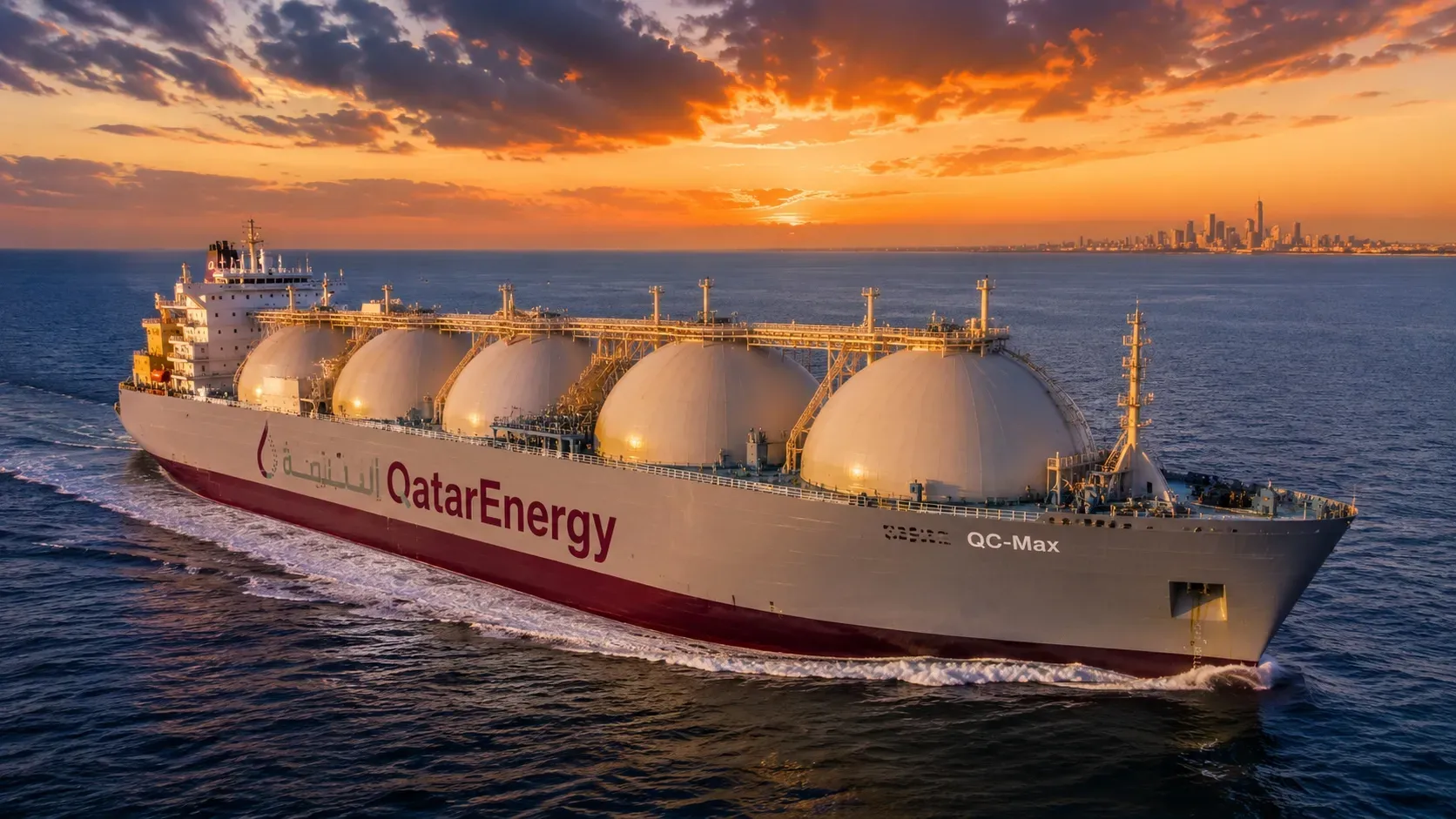
The world's largest liquefied natural gas carrier has begun taking shape on the floor of a shipyard in Shanghai.
China State Shipbuilding Corporation (CSSC) announced this week that its subsidiary Hudong-Zhonghua Shipbuilding has commenced construction of the first vessel in the QC-Max class - a new category of LNG carrier that surpasses anything previously built in the history of maritime energy transport. The ship is being built for QatarEnergy, the Gulf state's state-owned energy giant, as part of a landmark agreement that is reshaping the global LNG supply chain.
A Ship That Rewrites the Record Books
Each QC-Max vessel will stretch 344 metres in length and 53.6 metres in width, with a cargo capacity of 271,000 cubic metres of liquefied natural gas - making it the largest LNG carrier ever built. The ship will be equipped with a dual-fuel propulsion system compliant with IMO Tier III environmental standards, and engineered to maintain a daily cargo evaporation rate of just 0.087% - a figure that reflects the precision of its design.
To put the scale in perspective: a single QC-Max vessel can carry enough LNG to supply gas to 4.7 million Shanghai homes for an entire month - between 25% and 30% more efficiently than a conventional 170,000 cubic metre carrier.
The vessel will be capable of berthing at a wide range of deep-sea LNG terminals globally and is designed for long-haul routes across multiple ocean basins.
The Contract Behind the Construction
The QC-Max program is underpinned by two contracts signed between QatarEnergy and CSSC in 2024, covering the construction of 24 QC-Max vessels in total, with a combined value exceeding 56 billion yuan - approximately $8.3 billion. The deal is described as the largest shipbuilding order ever recorded in industry history.
The 24 vessels will be delivered in phases between 2028 and 2031, with QatarEnergy's total fleet expansion order book now standing at 128 vessels across all classes - the largest single LNG fleet program ever undertaken by any company in the sector.
The construction and operation of the new carriers will be conducted in collaboration with COSCO Shipping and Mitsui OSK Lines, two of the world's leading maritime operators.
Qatar's Strategic Play for LNG Dominance
The launch of construction is not an isolated industrial event - it is a deliberate strategic signal.
QatarEnergy is currently taking delivery of a new LNG tanker every three weeks, as it builds toward a 200-vessel fleet that would be the world's largest. As of the latest figures, the company has received 38 vessels out of its total order book of 128 - with CEO Saad Sherida Al-Kaabi describing the program as the biggest shipbuilding initiative in the LNG industry's history.
The fleet expansion is directly linked to Qatar's production ambitions. LNG output is targeted to double to 160 million tonnes per year by 2030 - a figure that would cement Qatar's position as the dominant force in global LNG supply for decades ahead.
In February 2026, QatarEnergy awarded the final engineering, procurement, and construction contract for the North Field West project - a 16 million tonne per annum expansion that includes carbon capture capacity of 1.1 million tonnes per annum and is expected to produce its first LNG cargo by the end of 2031.
Why This Matters Beyond Qatar
The significance of the QC-Max program extends well beyond the Gulf.
At a moment when global energy security is under acute pressure - with the Strait of Hormuz crisis having disrupted supply routes and pushed oil prices sharply higher earlier this year - Qatar's investment in long-range, high-capacity LNG infrastructure represents a direct bet on the permanence of gas as a global transition fuel.
New supply agreements have recently been signed with Japan and Malaysia, but QatarEnergy acknowledges that significantly more buyers will be needed to absorb the volume of LNG that its expanded production capacity will generate. Europe, Asia, and emerging markets in South and Southeast Asia are all in focus as potential long-term customers.
For the Gulf region, the QC-Max program reinforces the strategic positioning of Qatar as an energy infrastructure power - not merely a producer, but a vertically integrated LNG operator controlling production, shipping, and delivery on a scale no competitor currently matches.
EcoPulse24 Analysis
The steel now being cut at Hudong-Zhonghua Shipyard in Shanghai is more than raw material for a vessel - it is the physical expression of Qatar's long-term wager on natural gas as the fuel of the global energy transition.
The $8.3 billion QC-Max program, combined with Qatar's broader $200+ billion North Field expansion, represents one of the largest coordinated energy infrastructure investments anywhere in the world. At a time when Western energy majors are navigating pressure to divest fossil fuel assets, QatarEnergy is moving in the opposite direction - doubling capacity, expanding fleet, and locking in long-term supply relationships across Asia and Europe.
The central question the market will answer over the next decade is whether global LNG demand will grow fast enough to absorb what Qatar is building. If it does, the QC-Max fleet will be the backbone of a transformed global gas trade. If it does not, Qatar will have built the world's largest and most sophisticated surplus.
For now, the cranes in Shanghai have their answer.
Key Facts at a Glance
| Metric | Figure |
|---|---|
| Vessel class | QC-Max |
| Length per vessel | 344 metres |
| Width per vessel | 53.6 metres |
| Cargo capacity per vessel | 271,000 cubic metres |
| Daily evaporation rate | 0.087% |
| Total QC-Max vessels ordered | 24 |
| Total contract value | $8.3 billion (~56 billion yuan) |
| Delivery schedule | 2028 – 2031 |
| Total fleet order book | 128 vessels |
| LNG production target by 2030 | 160 million tonnes per year |
| Shipbuilder | Hudong-Zhonghua / CSSC - Shanghai |
| Operating partners | COSCO Shipping / Mitsui OSK Lines |
Sources & References
Editorial Note
Disclaimer
© 2025 EcoPulse24. All rights reserved.