Saudi Arabia Cuts July Oil Prices to Asia While Crude Premiums Remain Near Multi-Decade Highs
Saudi Aramco lowered the July price of its flagship Arab Light crude by $6 per barrel, setting the grade at a premium of $9.50 per barrel

Riyadh | EcoPulse24
Saudi Arabia has reduced the official selling prices (OSPs) of its crude oil exports to Asia for a second consecutive month, signaling a recalibration of pricing strategy as global energy markets continue to grapple with supply disruptions and elevated geopolitical risks.
According to pricing documents reviewed by Bloomberg, state-owned oil giant Saudi Aramco lowered the July price of its flagship Arab Light crude by $6 per barrel, setting the grade at a premium of $9.50 per barrel above the regional benchmark.
The reduction exceeded market expectations, as refiners and traders surveyed by Bloomberg had anticipated a cut of around $5 per barrel.
Despite the adjustment, the premium remains among the highest seen in decades, highlighting the continued strength of Gulf crude markets amid an unusually tight supply environment.
Lower Prices, But a Historically Strong Market
While the headline move points to lower prices, the broader market context tells a different story.
Even after the reduction, Saudi crude continues to command a significant premium relative to competing grades, underscoring the strategic value of reliable supply during a period of heightened uncertainty across global energy markets.
The latest pricing decision therefore reflects a repositioning from exceptionally elevated levels rather than a response to weak demand.
Saudi Aramco also reduced prices for all crude grades sold to Europe and the Mediterranean by $10 per barrel, while official prices for North American buyers were lowered by $2 per barrel.
The adjustments suggest the company is seeking to maintain competitiveness across key export markets while preserving market share in Asia, its largest customer region.
Strait of Hormuz Disruptions Continue to Reshape Oil Flows
The pricing changes come as global oil markets remain heavily affected by disruptions surrounding the Strait of Hormuz, one of the world's most important energy transit corridors.
Ongoing restrictions on tanker movements have left vessels stranded inside the Persian Gulf while preventing empty tankers from entering to load new cargoes, significantly reducing the flow of crude and petroleum products from the region.
The disruption has forced some producers to curtail output, while others have slowed refinery operations as logistical bottlenecks continue to affect exports.
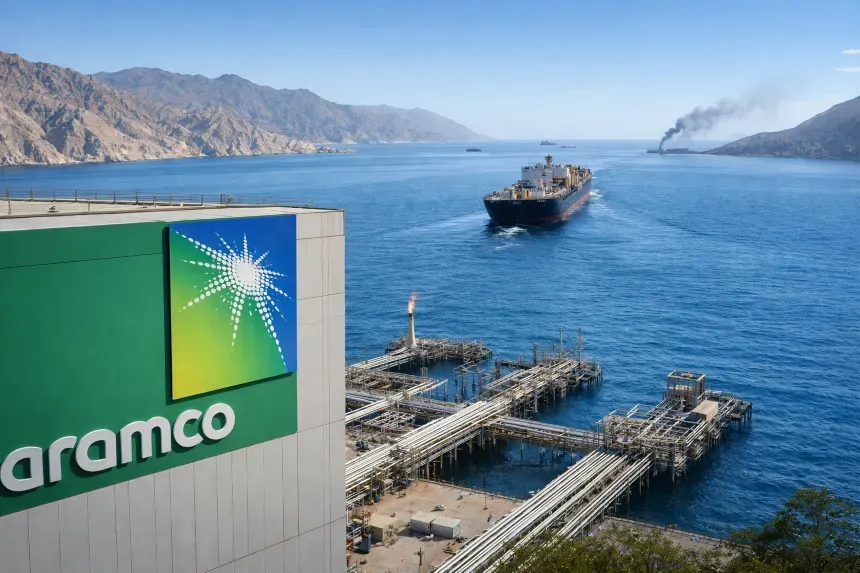
Against this backdrop, Saudi Arabia has maintained a relative advantage through its East-West Pipeline, which allows crude to be transported across the Kingdom to the Red Sea export terminal at Yanbu.
This infrastructure enables Aramco to bypass the Strait of Hormuz for a substantial portion of its exports and maintain approximately 70% of pre-conflict export volumes, according to market estimates.
Refining Margins Remain Elevated
Saudi Arabia's integrated energy model has also helped cushion the impact of supply disruptions.
Refineries located on the Kingdom's western coast have continued producing diesel, jet fuel, and other refined products, benefiting from stronger refining margins that emerged following the onset of the regional crisis.
Although refining profits remain elevated by historical standards, market data suggests margins softened toward the end of May, potentially indicating some demand destruction as consumers and industries adjust to higher energy costs.
Analysts note that Aramco traditionally aligns crude pricing with refinery economics, making the decline in refining margins a possible factor behind the company's July pricing decision.
OPEC+ Continues Supply Increases
The pricing adjustments were announced one day after OPEC+ approved another increase in production targets.
The alliance agreed to raise July output quotas by 188,000 barrels per day, marking the fourth consecutive production increase since April.
However, many market participants view the increase as largely symbolic while logistical and geopolitical challenges continue to constrain the movement of physical barrels.
The decision nevertheless signals that OPEC+ intends to maintain supply flexibility and prepare for a potential normalization of regional energy flows once current disruptions ease.
Key Figures
| Indicator | Value |
|---|---|
| Arab Light July Price Adjustment | -$6 per barrel |
| New Premium to Asia Benchmark | +$9.50 per barrel |
| Europe & Mediterranean Adjustment | -$10 per barrel |
| North America Adjustment | -$2 per barrel |
| Export Capacity via Yanbu Route | ~70% of pre-conflict levels |
| OPEC+ July Output Increase | 188,000 bpd |
EcoPulse24 Analysis
Saudi Aramco's latest pricing decision highlights the unusual dynamics currently shaping global oil markets.
Under normal circumstances, lower official selling prices and higher OPEC+ production targets would be viewed as bearish signals for crude prices. Yet oil markets remain supported because investors are focused less on production quotas and more on the security of supply chains.
The Strait of Hormuz remains the central issue. As long as uncertainty surrounds one of the world's most critical energy corridors, Gulf crude is likely to continue commanding significant premiums regardless of incremental production increases.
The situation also demonstrates Saudi Arabia's strategic advantage within the region. While many producers remain vulnerable to disruptions affecting Gulf shipping routes, Aramco's ability to redirect exports through the Red Sea provides a degree of resilience that few competitors can match.
For investors, the latest price cuts should not be interpreted as a sign of weakening demand. Instead, they reflect a tactical adjustment from exceptionally high premium levels in a market where energy security, logistics, and geopolitical stability have become as important as traditional supply-and-demand fundamentals.
As long as regional tensions persist, oil pricing will likely remain driven by access to markets and export reliability rather than production volumes alone.
Explore Related Coverage
Sources & References
Editorial Note
Disclaimer
© 2025 EcoPulse24. All rights reserved.